Integration in Motion
(everything stated in this blog is based upon my own research, personal practice, and opinion)
The Fool’s Journey Through the Major Arcana, Part 8 of 22
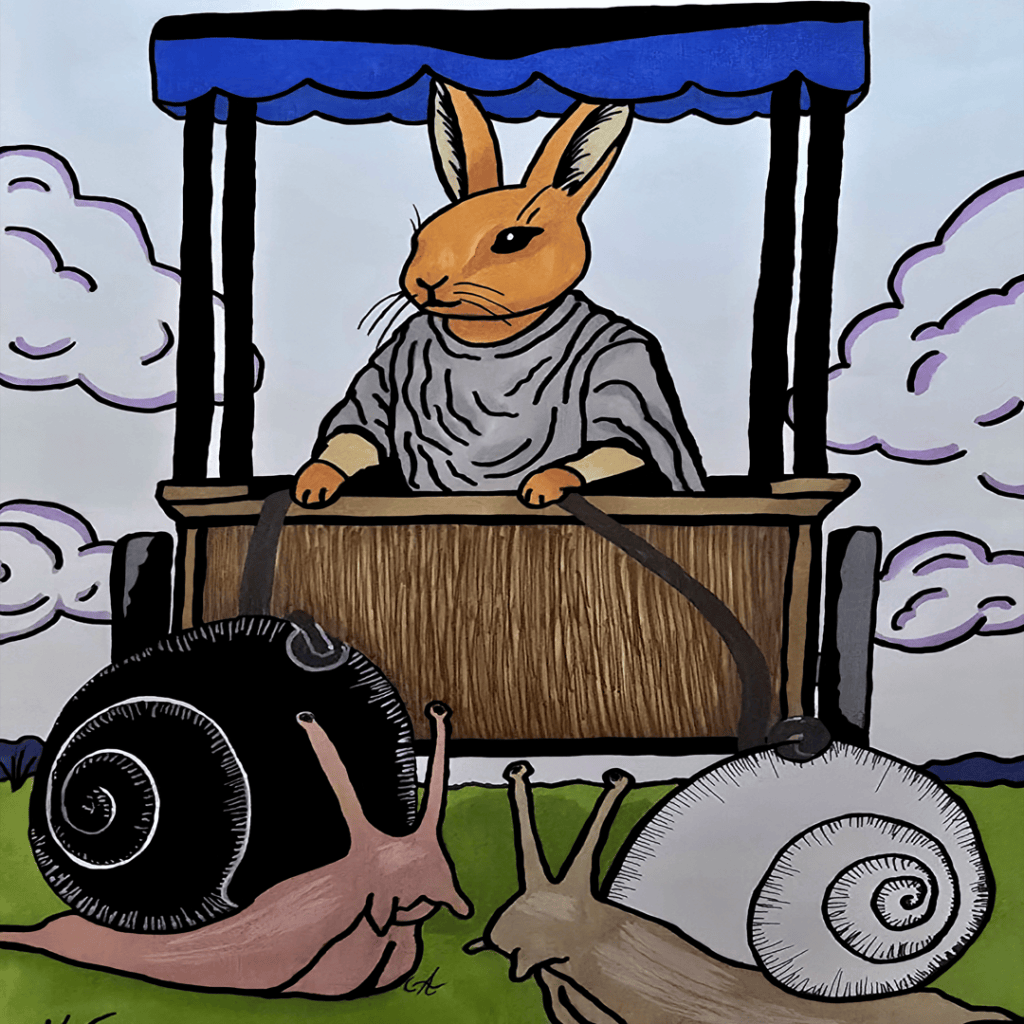
Life tends to get more complicated just after we think we’ve figured it out. We gain moments of clarity where our values suddenly make sense, and difficult choices finally reveal themselves. The path ahead appears reassuringly obvious. Unfortunately, clarity itself changes nothing. Knowing the direction and walking the road are two entirely different skills. The Chariot concerns itself with the latter.
Popular culture treats The Chariot as the tarot’s motivational speaker. It is the card of victory, determination, ambition, success, and charging fearlessly toward your goals. There is certainly truth in this interpretation, especially looking at the imagery in the RWS (Ryder-Waite-Smith). A confident figure stands proudly in an ornate chariot beneath a canopy of stars. By appearance, they are every bit the conquering hero returning home after another successful campaign. It is easy to see why this card has become associated with achievement. But… focusing exclusively on victory overlooks a deeper question. Victory over what? The Chariot never actually promises success. It promises movement. Those are not the same thing. Plenty of people achieve extraordinary things while remaining deeply divided within themselves. Likewise, plenty of people who never appear particularly successful possess an extraordinary sense of internal harmony. The Chariot says less about winning than it does about what allows genuine forward movement to occur in the first place.
This matters because human beings are remarkably good at confusing activity with progress. We mistake motion for momentum. We fill our calendars, answer emails, attend meetings, make plans, buy planners to organize the plans, then spend an embarrassing amount of time researching better planners. Entire industries have been built around convincing us that productivity is synonymous with purpose. We are masters of constant movement while somehow remaining in exactly the same place psychologically. The Chariot interrupts this performance and asks… Are wheels actually turning, or have you become very efficient at running in circles?
We tend to imagine willpower as an act of force. Knuckles gripping the steering wheel. Gritted teeth and a relentless refusal to quit. We admire stories of people who push through exhaustion, ignore pain, silence doubt, and bulldoze every obstacle standing in the way of success. There is certainly a place for resilience, it is what has gotten me this far in my personal life. The Chariot is a far more sophisticated understanding of strength. Force has limits and eventually exhausts itself. Integration is what creates momentum. One relies on constant effort, but the other transforms effort into direction.
This helps explain why The Chariot appears where it does within the Fool’s Journey. By this point, the Fool has accumulated an impressive collection of experiences. The Magician revealed untapped potential. The High Priestess invited trust in intuition. The Empress demonstrated the abundance that naturally emerges through nurture rather than control. The Emperor established structure. The Hierophant explored inherited systems of belief. The Lovers confronted the difficult work of aligning values through conscious choice. Every one of these encounters contributed another piece of the developing self. The Fool has not lacked wisdom, they have lacked integration. Collecting lessons and embodying them are entirely different accomplishments. One fills the mind, and the other changes the person.
This is one of many uncomfortable truths about personal growth. We tend to assume transformation happens when we discover something new, and occasionally it does. More often, transformation occurs when scattered insights finally begin cooperating with one another. Most of us already possess enough knowledge to improve our lives in meaningful ways. We know we should probably sleep more, spend less time staring at glowing rectangles, move our bodies occasionally, and perhaps stop convincing ourselves that an entire bag of potato chips qualifies as emotional processing. Information has never really been the problem… Alignment is.
When we revisit the RWS deck the imagery of The Chariot begins revealing this almost immediately. Behind the Charioteer stand the walls of a city, symbols of civilization, familiarity, safety, and everything already known. Cities are interesting places psychologically. They offer protection while simultaneously encouraging routine. We build them to defend ourselves from uncertainty, then spend years wondering why life has become so predictable. There is nothing inherently wrong with comfort. Comfort becomes problematic when it transforms from a place of rest into a place of permanent residence. Growth occurs just beyond the boundaries we spend so much energy constructing.
Above the Charioteer stretches a canopy filled with stars, reminding us that every meaningful journey unfolds beneath something larger than ourselves. Whether we interpret those stars spiritually, psychologically, or symbolically matters very little. They represent perspective. Human beings possess an ability to mistake immediate circumstances for ultimate reality. A disappointing afternoon becomes a disappointing life. One failed relationship somehow predicts every future relationship. A difficult season convinces us that spring has been permanently cancelled. Looking upward interrupts this tendency. The stars have watched civilizations rise and collapse, empires flourish and disappear, and generations come and go. They offer a reminder that our current struggles, while deeply personal, are rarely permanent.
From here we turn to the sphinxes. We are creatures of contradiction. The black sphinx and the white sphinx are frequently described as representing opposing forces. Conscious and unconscious. Logic and emotion. Instinct and intellect. Action and reflection. Desire and discipline. Fear and courage. Every interpreter brings a slightly different list, but they all point toward the same essential truth. Human beings are wonderfully, gloriously, frustratingly complicated. We are capable of holding deeply contradictory impulses simultaneously without finding them particularly strange. We long for stability while craving adventure. We seek intimacy while protecting ourselves from vulnerability. We desire change but become strangely sentimental about the habits making us miserable. If someone else behaved with the same level of internal contradiction we routinely tolerate in ourselves, we would gently suggest they consider professional help.
My favorite detail in the RWS image of The Chariot is something that is not there at all… There are no reins. Think about it for a moment. Two powerful creatures sit before the Chariot, each capable of pulling in opposite directions, and nowhere do we see how they are controlled. There are no leather straps connecting the Charioteer to the sphinxes. No visible harness. Nothing that would ordinarily allow a driver to direct two independent forces toward a common destination. Considering how meticulously Arthur Edward Waite and Pamela Colman Smith constructed every symbolic detail of this deck, it is difficult to imagine such an omission being accidental.
The Charioteer is not leading through force. This is where The Chariot shifts away from most interpretations of willpower. We have inherited this idea that strength comes from overpowering ourselves. We imagine discipline as an endless internal wrestling match where the responsible part of our personality must constantly pin the irresponsible part. Every temptation becomes an enemy. Every doubt becomes a weakness to suppress. Every uncomfortable emotion is treated like a houseguest who has overstayed their welcome. It is an exhausting way to live… remaining permanently at war with ourselves. Wars, even victorious ones, leave casualties.
Instead of asking which part of yourself deserves to win, The Chariot asks whether those opposing forces might actually need one another. We divide ourselves into categories. We celebrate our strengths while exiling anything that feels inconvenient. Logic becomes respectable, and emotion becomes embarrassing. Ambition is praised, and rest is viewed with suspicion. Vulnerability is mistaken for weakness. Anger is dismissed as something to eliminate rather than something to understand. Before long we have created an internal hierarchy where certain parts of ourselves receive admiration while others are banished to the psychological basement. The problem is that banished things rarely remain quiet. Ignore your fears long enough and they begin making decisions without asking your permission. Suppress your anger and it eventually reappears as resentment. Pretend your need for rest does not exist and your body will force the issue.
Carl Jung spent much of his career arguing that psychological maturity was not achieved by becoming perfect. It emerged through integration. Every personality contains qualities we readily accept and qualities we instinctively reject. Jung referred to these rejected aspects as the shadow, not because they were evil, but because they remained hidden from conscious awareness. We often assume enlightenment means eliminating the shadow entirely. Jung suggested that the goal is not to destroy the shadow. The goal is to know it well enough that it stops driving your life. The black sphinx is not a problem to solve. The white sphinx is not a prize to protect. Both belong exactly where they are.
A Charioteer stands rather than sits. Standing in a moving vehicle requires balance. You cannot lean too heavily in one direction without losing stability altogether. There is no lounging comfortably while someone else does the work. Every shift in terrain demands adjustment and requires awareness. Life asks much the same of us. Balance is not a destination we eventually reach; it’s a continuous conversation between opposing forces. We are never permanently balanced.
We are constantly told to “follow your passion,” as though passion alone were capable of sustaining an entire life. Passion is wonderful, but has the attention span of a caffeinated squirrel (Hammy! IFYKYK). Some mornings it shows up early with coffee, and insists we conquer the world before lunch. Other mornings it sleeps in and leaves us wondering why yesterday’s brilliant idea suddenly feels like too much work. If life depend entirely on feeling inspired, it will become horribly inconsistent. Discipline and structure help, but even those become brittle if disconnected from meaning. The Chariot suggests that none of these qualities are sufficient by themselves. Passion needs discipline, discipline needs purpose, purpose needs intuition, and intuition needs reason. Every one of these depends upon another.
Plato described the soul as a chariot pulled by two horses, one noble and disciplined, the other impulsive and unruly. The driver’s task was not to destroy either horse but to guide both toward the same destination. Hindu philosophy tells a similar story in the Katha Upanishad, where the body becomes a chariot, the intellect the driver, the mind the reins, and the senses the horses. This idea shows up across time and culture. Human beings are not singular creatures. We are collections of impulses constantly negotiating with one another. Wisdom doesn’t emerge when one impulse dominates the rest, but rather when each finds its proper place within the whole.
It is tempting to believe that progress requires becoming someone different. Self-help culture has made an entire industry out of selling upgraded identities. Become more confident, productive, successful, disciplined, mindful, optimized, yada yada yada… We are forever being encouraged to improve ourselves as though our personalities are software awaiting the latest update. What if the person you are is not fundamentally incomplete? What if the challenge is not adding another quality to your character, but allowing the qualities already present to finally cooperate? How much energy do we spend pulling against ourselves without realizing it? Imagine how much farther the Chariot travels once every force begins pulling together instead of apart.
The Chariot is not truly about conquest. Conquering another person proves remarkably little. Conquering your circumstances often depends upon luck as much as effort. Even external success can arrive while leaving the inner world in complete disarray. Integration, however, cannot be faked. It reveals itself in the ordinary moments. You begin keeping promises made to yourself. Your actions slowly start resembling your stated values. Decisions become less exhausting because the internal committee has finally stopped filibustering every meeting. Life does not necessarily become easier, but it does become less divided. The energy once spent negotiating with yourself becomes available for living.
This card is traditionally associated with movement, yet the Charioteer appears remarkably calm. There is no frantic expression. No desperate urgency, or sense of barely maintaining control. The image suggests that genuine momentum is often peaceful. Chaos is loud, but integration rarely is. The people making the greatest progress in life are not always the ones moving the fastest. They are the ones no longer wasting energy fighting themselves.
Are you actually moving forward, or are different parts of your life pulling in different directions while you mistake the resulting tension for progress? It is entirely possible to work tirelessly toward goals that contradict your deepest values. It is possible to chase success while neglecting health. To pursue stability while starving curiosity. To seek approval while abandoning authenticity. From the outside the wheels appear to be turning, but from the inside the journey never truly begins.
Victories are temporary, and every finish line eventually becomes another starting point. The deeper gift of this card is coherence. It is liberating, reaching a place where your values, your actions, your intuition, your discipline, your fears, and your hopes all begin speaking the same language. The road ahead will still contain uncertainty. Obstacles will continue appearing with irritating regularity. Life will always retain its talent for unexpected detours. It’s the experience of traveling that changes completely, because the conflict is no longer happening within you.
The greatest journeys are rarely measured by distance, or by how quickly we move. Real willpower has never been about forcing ourselves to become someone else. It has always been about gathering every scattered part of who we already are, inviting them into the same vehicle, and finally moving forward together.
 The Art of Becoming
Leave a comment