Skip to content
  • The Fallow Season:

    December 22, 2025
    Basics, Community

    What Death Teaches Us About Being Alive

    (everything stated in this blog is based upon my own research, personal practice, and opinion)

    No one really talks about how walking closely with death makes life louder. Not gentler. Not softer. Louder. Laughter lands heavier in your chest. Warmth feels startling. Joy can sting, like your body isn’t sure it’s allowed to hold that much aliveness at once. Once you’ve spent time with death’s silence, really sat with it, listened to it, everything that still moves feels electric by comparison.

    That’s why I talk about death the way other people talk about the weather. Not to be shocking. Not to be grim. Death changes how you see things. You don’t stand at the edge of endings and come back looking at the world the same way. Blooming flowers stop being decorative and start feeling defiant. Breath stops being automatic and starts feeling sacred.

    In my personal practice, I work with death energies and death-aligned entities. I work with psychopomps, and with their crossroads aspect. The guides, the carriers, the ones who walk with souls at thresholds. I spend time in liminal spaces, where something is no longer alive as it was, but not fully gone either. The places in between, where change hasn’t settled yet, and choice still hums in the air.

    Late autumn into winter makes people deeply uncomfortable. Spring sells hope. Summer sells confidence. Autumn gets an aesthetic. The fallow season, the stretch where everything looks like it’s dying, doesn’t perform. Trees stop trying to impress you. Flowers disappear without apology. The earth stops producing and starts resting. Rotting. Becoming quiet. The world exhales, and if you let yourself follow its lead, so do you.

    We humans, hate that. We hate stillness. We’ll scroll ourselves numb rather than sit long enough to notice the hollow places inside us. Empty feels too close to dead… and dead is a word everyone pretends to understand until it gets uncomfortably close.

    There’s a strange peace in this season. Not the polished kind sold as self-care, but the muddy, compost-scented kind. The kind that reminds you rest is not failure, and decay is not the enemy. Sometimes things have to die, or they rot from the inside instead. You are not meant to bloom all year.

    Death, physical/spiritual/seasonal, is the most honest teacher I’ve ever encountered. It doesn’t flatter you. It doesn’t negotiate. It doesn’t care about your plans, your productivity, or how well you’re performing “having it together.” Death asks one question, over and over: Did you live while you were alive? Not “did you achieve things.” Not “did you stay busy.” Did you actually inhabit your life? Did you feel your body, your breath, your relationships? Did you notice yourself being here?

    Standing near endings changes how you answer that. When you truly sit with the reality that things end, your own breath suddenly feels louder. Stranger. Sacred. Sometimes miraculous. Sometimes uncomfortable. Often both.

    The winter solstice marks the official beginning of the fallow season. The time when the world grows quiet and cold and looks, at first glance, like nothing is happening. I love it because it’s honest about emptiness. It doesn’t distract you or dress endings up as something else. Leaves fall. Fields go bare. Soil stops producing. Everything says, “Pause.” Not forever. Just now. When you unclench, slow down, and let yourself feel the ache of what you’ve lost instead of immediately fixing it. When you stop resisting, something shifts.

     People think death work is only about grief. Grief is part of it, yes. There’s also absurdity, tenderness, dark humor, and a joy that feels almost rebellious. Not the joy of perfect circumstances, but the joy that shows up when you realize life is fragile, unfair, temporary, and still so beautiful it makes your chest ache.

    Death doesn’t remove beauty. It sharpens it. It teaches you to pay attention. You start noticing how warmth feels in your hands. How someone’s laugh changes when it’s genuine instead of polite. The hush before snow falls. The smell of cold earth after rain. The quiet intensity of someone really listening. The sound of your own heartbeat when the world is asleep.

    When I work with death energies, when I stand at crossroads with beings who understand the weight of endings, they don’t tell me to be fearless or enlightened or wise. They tell me to wake up. To stop treating life like a rehearsal I’ll get to redo later. They don’t ask me to stop fearing death. They ask me to stop being afraid of life. That’s why the fallow season feels like an invitation instead of a threat. It whispers, “Come sit with what’s ending.” Not to fix it. Not to rush through it. Just to witness.

    Stillness is uncomfortable. That’s why we stay busy. Busy is armor. Busy keeps you from noticing the loneliness under your ribs, or the way your days have started to blur together. Busy keeps you from admitting you’re tired of pretending. The earth isn’t afraid of endings. It doesn’t cling to summer. It lets leaves fall without drama. Then it does something deeply patient… it turns what died into soil. Into nourishment. Into the conditions for spring. We keep trying to skip that part. We want harvest without winter. Rebirth without decay. Transformation without letting anything die first. Spiritually? Emotionally? Magically? That’s not how it works.

    The world runs on cycles, not straight lines. No spell, no ritual, no manifestation practice will spare us grief, loss, or endings. Those aren’t mistakes. They’re nature.

    Crossroads are messy places. They’re not beginnings or endings. They’re both and neither. They’re transition. Choice. The held breath between steps. In journey work, I often find myself standing there, and death doesn’t always appear as something grim or ominous. Sometimes it feels like quiet hands. Like someone turning down the noise so you can finally hear yourself again. That silence feels like kindness.

    We’re taught that life and death are opposites. I don’t believe that. I think the opposite of death is denial. Numbness. Refusing to feel. Real life, life that warms your chest and makes your teeth hurt a little, only shows up when you stop running from what scares you.

    Which brings me back to the fallow season. This season isn’t dead. It’s preparing. Under frozen ground, seeds are holding their breath. Roots are conserving strength. Animals burrow down not because they’re weak, but because they’re wise. The world isn’t gone. It’s gathering itself.

    What if humans did the same?

    What if rest wasn’t punishment?

    What if quiet wasn’t failure?

    What if you let part of your life go fallow, not permanently, just long enough to breathe?

    Living in alignment with death (seasonally, spiritually, magically) doesn’t make you morbid. It makes you grateful in a way nothing else does. You realize joy doesn’t have to be loud, it just has to be real. You learn that some things can end and still be sacred. That some doors close because you’re meant to walk somewhere darker and deeper before the path rises again. That love hurts precisely because everything ends, and that’s also what makes it precious. Death work doesn’t make you fearless. It makes you brave enough to love things you know won’t last.

    Working with death-aligned energies taught me that these forces aren’t interested in fear or worship. They’re interested in truth. They don’t ask you to bow. They ask you to notice that you’re still breathing and not waste it. When I journey with them, I don’t come back with “everything will be fine.” I come back with something truer, “everything ends”, and that’s why it matters. Strangely, that makes life feel softer. Not easier… softer. Like something worth touching instead of rushing past. We resist that wisdom. We want to be spring all the time. Blooming. Thriving. Producing proof we’re doing life correctly. Nothing in nature functions that way. Perpetual summer is a desert. Endless blooming is rot. Even stars collapse.

    Why do we think we should be different?

    This is why burnout happens. Why people feel hollow even when their lives look fine. Why grief hits like a truck. We were taught to love what stays, not what ends. Death work, winter, and decay teach you how to love things because they end. Loss still hurts, but it hurts cleaner. Not festering, but rather in a way that cracks you open and lets more light in. Death made me fall in love with life. Not because it’s pretty, but because it’s temporary. That’s what makes it sacred.

    The fallow season offers permission. Permission to not be blooming. To lay down what’s heavy. To let exhausted parts of yourself die. Permission to not be useful, impressive, or “on.” Permission to rest without earning it. You are part of nature too, and nature rests. If death has taught me anything, it’s that life isn’t something you can hoard. You can only live it now, messily, honestly, with dirty hands and laughter that sometimes sounds like crying.

    When things go quiet inside you, don’t panic. You’re not broken. You’re in a season. Let yourself be fallow. Sit with what’s ending. Bury what’s dead. Light a candle for who you used to be. Stand at the crossroads without rushing through it. There are lessons in thresholds you can’t learn anywhere else.

    When the frost melts, when the light returns, when something small inside you stirs and whispers “maybe,” you’ll rise. Not because you forced yourself to, but because you honored the dying first.

    Death isn’t the opposite of life. It’s what shapes it.

    Life is a miracle, not because it lasts forever, but because it doesn’t.

    Blessed Solstice to you all!

    No comments on The Fallow Season:
  • Lines in the Sand:

    December 4, 2025
    Basics, Community, Dreams/Oracle/Divination

    Power, Consent, and Energetic Boundaries in Magick

    (everything stated in this blog is based upon my own research, personal practice, and opinion)

    Magick is a game of power. That’s the truth. Anyone who tells you otherwise is probably trying to sell you a personality cult. Power isn’t dirty. It’s not inherently corrupt. But it can get real messy, real fast. Power, consent, and boundaries aren’t just buzzwords. They are the sacred infrastructure that keeps your practice from turning into an energetic mosh pit of chaos, co-dependence, and crap you didn’t sign up for.

    Consent Matters, Always

    Somewhere along the way, folks forgot that magick isn’t just “talking at the universe”, it’s a conversation. That means everyone involved deserves consent. You wouldn’t (hopefully) walk into someone’s house, light incense, and start asking for favors without checking if they were cool with it. So why do we treat spirits, deities, ancestors, or energetic forces like magical vending machines? Consent goes both ways. You don’t just give it, you ask for it. Before you summon. Before you invoke. Before you start channeling random cosmic energies just because the vibes are spooky on a Tuesday.

    Spiritual Vampires Are Real (And Sometimes They’re You)

    Let’s get uncomfortable for a second. Sometimes the boundary violating force isn’t some external parasite, it’s you, chasing energy without clarity or connection. Casting from desperation. Leaking power through neediness or clinging to someone else’s field because your own feels like wet cardboard. We’ve all done it. The key is owning it, not wallowing in shame. Recognize when you’re trying to siphon instead of summon. When you’re clinging instead of calling. That’s not magick, it’s spiritual codependency dressed up in ritual robes and a Scooby mask, trying to convince the spirits it’s the High Priest of Atlantis.

    Also, if someone always leaves you feeling like a magically mugged tourist, that’s a red flag, not a bonding experience. Boundaries are how we keep our spiritual energy sovereign, not as a wall, but as a perimeter. You don’t owe anyone your field, and no one owes you theirs.

    Boundries Protect you

    If you’ve ever been told to “stay open to receive whatever the universe wants to send you,” please allow me to lovingly scream… NO. Being open doesn’t mean being unfiltered. That’s how you catch psychic infections, uninvited attachments, and random astral nonsense that acts like a spiritual raccoon rifling through your subconscious trash.

    Have boundaries around your channel. Set the terms. Think of it like magical plumbing, you want a controlled flow, not a backed up system. It’s okay to say, “Only entities in alignment with my highest good may speak.” or, “No, that naked full moon dance is not an excuse for possession.”

    Not every being you encounter is your friend. Not every force you feel is benevolent. Not every spirit wants what’s best for you, no matter how shiny they seem. Spirits, like people, have their own agendas, and sometimes those agendas are just as petty, selfish, or chaotic as your least favorite ex. Some genuinely want to help. Some want worship. Some are bored out of their incorporeal minds and think keeping you confused and engaged is the best entertainment they’ve had since the Black Plague. Just because something is non-corporeal doesn’t mean it’s all-knowing or all-wise. Some spirits are the cosmic equivalent of Reddit trolls with glowy auras. Keep your discernment dialed up, and don’t assume a spirit’s presence means it has your best interest at heart.

    Discernment isn’t paranoia. It’s self-respect. Before you hand over your energy, your trust, or your altar space, ask some damn questions:

    Who are you?

    What do you want?

    Why me?

    What’s the cost?

    If you’re afraid to ask, that’s already a red flag. Spirits that demand blind faith are no better than living cult leaders.

    Holding Power ≠ Playing God

    Just because you can influence a situation doesn’t mean you should. Magick isn’t a free pass to play puppet master, it’s a responsibility. With power comes the need for integrity, not just clever spellcraft. Ask yourself if you acting with accountability. Are you considering the ripple effects, or just casting for convenience? Real power isn’t just about effect, it’s about ownership. Responsibility means you’re not just cleaning up after your workings but taking care not to make a mess in the first place. Integrity means your actions align with your values, not your ego. Accountability is what makes your power trustworthy to spirits, to others, and to yourself. Power without ethics is just magical bullying. Before you proceed, ask yourself:

    Am I solving or controlling?

    Am I acting from fear or clarity?

    Do I have the full picture or just my version of it?

    You’re allowed to wield power. You’re also responsible for what that power does when it ripples through other people’s lives. This isn’t about some 3-fold, 7-fold, or 10-fold nonsense, It’s just basic logic. Actions have consequences, and magick is an action. Every working is a choice you make that moves energy through the world. Pretending it doesn’t come with impact is like throwing a brick into a pond and acting surprised by the splash. Responsibility means you own your spellcraft like you own your shadow. Integrity means you don’t hide behind “just following spirit” when the outcome is messy. Accountability is what keeps your practice from turning into a mystical poster child for poor impulse control.

    Energy Hygiene

    You wash your hands after a messy meal. You should cleanse your field after a messy ritual. If you’re doing heavy energy work, banishing, hexing, deep ancestral stuff, possession rituals, etc… cleanse yourself. Ground. Close the door you opened. Think of it as aftercare for your soul. You wouldn’t leave the ritual version of open-heart surgery without stitching things up, right? Energy hygiene also means noticing when your field is off and doing something about it. That might be a simple breathwork session. It might be a banishing. It might be screaming into a pillow and then drinking water like it’s holy. Whatever works. Just do something.

    Sacred ‘No’

    You don’t owe anyone your participation. Not in ritual. Not in pathwork. Not in energy exchanges that make your skin crawl. Saying no is magick. It’s a boundary that affirms your power. It’s a ward in word form. It’s often the only thing standing between you and energetic garbage that would love to nest in your aura like it’s rent-controlled. Say it. Say it loud. Say it with your whole chest:

    No, I don’t want to do group trancework with that guy who smells like patchouli and manipulation.

    No, I’m not interested in merging energy fields “for healing.”

    No, I will not “just open up and see what comes through.”

    No is a whole sentence. It doesn’t require justification, elaboration, or a PowerPoint presentation. No is sacred. Use it.

    Power Can Be Shared, But Not Stolen

    The best magickal communities are ones built on mutual respect and energetic consent. Not forced merging. Not weird hierarchies. Not one High Priestess to rule them all. When power is shared, it flows. When power is hoarded, it rots. If someone’s constantly taking, constantly draining, or constantly controlling, that’s not leadership. That’s theft with candles. Trust your gut. If it feels off, it is. If it feels like control dressed as guidance, it probably is. You’re not imagining it. Power can be communal without being codependent. It can be collective without being culty. That’s the balance.

    You Don’t Need Permission To Protect Yourself

    Let’s say that again, and louder for those in the back… You do not need spiritual permission to set boundaries, say no, ward your space, or tell a being (incarnate or otherwise) to get the hell out.

    You’re allowed to defend your field. You’re allowed to shield. You’re allowed to shut the door. You are not obligated to be “open” just because someone tells you it’s more spiritual. You are not failing if you prioritize your safety over someone else’s expectations. Magick is your right, and so is safety. Do not fear advocating for yourself. If you do feel fear in doing so, that’s not a spiritual failing, that’s a sign. It means remove yourself from the situation as quickly and safely as you can. You don’t have to explain, justify, or negotiate your right to feel safe, you just have to honor it.

    All the ritual, all the spells, all the cosmic mojo in the world won’t mean jack if your boundaries look like wet paper. Your power needs a vessel. Your vessel needs boundaries. Your boundaries need consent. This isn’t about being rigid. It’s about being sovereign. You don’t build walls, you build clarity. You don’t shut everything out, you decide what gets in. You are not just a channel. You are a force. Treat your energy like it matters. Because it does.

    Monthly Mindfulness – for December 2025

    (From the upcoming Walking With the Gods icon deck)

    Aphrodite

    The ancient Greek goddess of love, beauty, desire, fertility, and sensuality. Revered across the Hellenic world, she embodies both physical attraction and the creative force of life itself. Often depicted emerging from the sea, fully formed and breathtaking, Aphrodite’s mythical birth from the foam of the sea (aphros) ties her to elemental forces of nature and the mysterious power of creation.

    She governs not just romantic and erotic love but also charm, pleasure, and the harmonizing influence of beauty in both humans and nature. Her presence was believed to soften hearts and inspire longing, not only among mortals but even among gods. While she is often portrayed as gentle and enchanting, Aphrodite also held a fierce, commanding power, capable of causing turmoil through jealousy, unrequited love, and irresistible passion.

    She is beauty that binds and burns, desire that creates and consumes. She is love as power, pleasure as law, harmony as enchantment. She is the allure that softens hearts, the charm that stirs gods, and the passion that topples reason. She teaches sovereignty through longing, creation through attraction, and the sacred force of the heart unveiled.

    No comments on Lines in the Sand:
  • Everything Is Conscious & You’re Part of the Chorus

    November 25, 2025
    Basics, Ceremonial, Chaos, Community, Dreams/Oracle/Divination

    The world view I approach magick (and life) from

    (everything stated in this blog is based upon my own research, personal practice, and opinion)

    Holistic panpsychism, when you strip it down to something you can actually say out loud without sounding like you’re about to hand someone a pamphlet, becomes pretty simple. At its core, it’s the idea that consciousness is built into everything. Not thoughts. Not personalities. Not conversations with your blender. More in the vein that every part of reality has an interior. A way it experiences being itself. It might be tiny. It might be simple. It might be nothing like you. But it’s not zero.

    When you connect enough of those interior experiences together, you get something more. The same way you aren’t just one cell, or a hundred cells, or even a trillion cells, but a whole person whose consciousness emerges from all that interaction. Holistic panpsychism says the world works like that at every level. Little bits of experience forming bigger experiences, forming bigger ones still. Like layers of awareness you can zoom in and out of.

    This is the part where someone always says, “So what, the rock is alive now?” in a tone that suggests they think they’ve debunked the whole thing. No, a rock doesn’t have opinions. A rock isn’t watching Netflix when you’re not looking. But… the rock isn’t empty. There’s something it’s like to be that rock. Something incredibly simple and unimaginably different, but still something. Sacking millions of those somethings together makes the world feel the way it feels.

    When you take this idea and set it next to animism, the way many cultures have always understood the world, something shifts. Suddenly it stops looking like a brand-new theory. Instead, it feels like philosophy finally catching up to the lived experience of basically all of humanity prior to industrialized skepticism.

    Animism says the world is full of beings, only some of whom are human. When you talk to a river or treat a mountain with respect or make an offering to a plant before you harvest it, you’re not performing a symbolic act. You’re engaging with something that has presence. Not necessarily a “spirit” with a name and hobbies and a favorite color, but a being. A something… a someone in the broadest sense.

    Holistic panpsychism and animism are looking at the same world. One is using philosophy to describe the structure of consciousness. The other is using relationship. Let’s say you’re in a forest. You’re not just surrounded by organisms. You’re inside a presence. It’s in the way the air feels. The way the light hits the ground. The way the silence shifts when you move. The forest isn’t conscious the way a human is. It’s conscious the way a forest is. Your job isn’t to translate it into something familiar. It’s to recognize that a different form of consciousness doesn’t make it less real.

    This is where most people struggle. We’ve been trained to think consciousness comes out of brains and only brains. Historically speaking, that’s a weird idea. That’s like assuming only guitars can make music, so if you hear drums or flutes or someone humming, you tell them they’re imagining it. Animism is a drum. Panpsychism is a hum. Occultism is the improvisation you do once you realize the world is full of instruments.

    Magick makes a lot more sense in a world where everything has an interior life. You’re not pushing physical objects around with invisible forces. You’re engaging with presences. Aligning yourself with them. Communicating through symbols, gestures, and ritual acts. If you accept that the universe is conscious in some form, magick stops being supernatural and starts being social.

    Think about intention. In a dead universe, your intention is just a private thought. It doesn’t go anywhere. It doesn’t matter unless you act on it physically. In a conscious universe, intention is like a ripple in a field. It interacts with everything else in the field. It’s not a command. It’s a signal. A request. A shift. What responds is whatever form of consciousness your signal touches.

    That includes the spirits people work with. Not all spirits are the same kind of being. Some might be the presence of a place, the collective awareness of a forest, or river, or storm. Some might be ancestral, the layered memory of lives lived before. Some might be archetypal, built from human experience woven into forms larger than any individual. Some might be independent, beings that exist because consciousness exists in more ways than we have names for. Panpsychism doesn’t rule these out; it actually makes them easier to understand. If consciousness is fundamental, then beings that aren’t tied to bodies aren’t breaking any rules. They’re just different kinds of participants.

    Because animism focuses on relationship instead of category, it doesn’t particularly care what kind of being a spirit is. It cares how you engage with it. Respect, reciprocity, and responsibility aren’t moral decorations. They’re the etiquette of interacting with a world full of subjects instead of objects. If you treat everything like an object, you eventually end up feeling alone because you’ve defined yourself as the only someone in a world of not-someones. If you treat the world like a gathering, you stop feeling isolated because you’re not an island anymore. You don’t need philosophy to feel that, but philosophy can give you language for why those intuitions feel right.

    When you sit with this worldview for long enough it stops being quiet. Not in the auditory sense. You’re not suddenly hearing whispers from tree branches. It’s more that the world starts to feel like something you’re inside, rather than something you’re observing from a distance. You walk differently. You listen differently. You start noticing how places have moods the same way people do. Not metaphors. Moods.

    Some places are welcoming. Some are wary. Some feel ancient, others feel young. Some feel like they’re waking up, others feel like they’re exhausted. Once you accept that these sensations might be real perceptions instead of imagination, you start forming relationships with places the same way you would with people. Not because you’re romanticizing nature, but because you’re finally treating your perception as a form of interaction rather than a glitch.

    Magick is a way of deepening those relationships. It is an extension of listening. You’re not commanding anything. You’re participating. You’re speaking in a language made of gesture, intention, and presence.

    Holistic panpsychism helps you understand why that language works. Animism teaches you how to speak it. The occult gives you tools to speak it fluently.

    I think one of the most important parts of all this is the way it shifts ethics. If everything has interiority, then everything is part of a shared moral field. I don’t mean morality in the right and wrong, or heaven and hell sense. I mean morality in the relational sense. When you take something, you’re affecting someone. When you leave something, you’re affecting someone. When you enter a place, you’re entering someone’s presence. When you act, you’re creating ripples in a field of other beings.

    It doesn’t mean you can’t live your life or make decisions that favor yourself. It just means you’re not doing it in a vacuum. It’s the difference between thinking you’re walking through an empty house and realizing you’re walking through a house where people are sleeping in the other rooms. You move differently. Not out of fear. Out of awareness.

    People didn’t develop animism because they were naïve. They developed it because they were paying attention. The land behaved like a presence. Weather behaved like a presence. Objects behaved like presences. Animals behaved like people. Spirits behaved like neighbors. Reality behaved like a community. Panpsychism is what you get when you reverse engineer that experience using philosophy instead of relationship.

    The irony is hard to miss. Philosophy spent centuries insisting the world was dead matter and only humans had consciousness. Now the cutting edge of consciousness studies is quietly backing away from that claim like someone who just realized they’ve been confidently giving the wrong directions for twenty minutes. There’s something deeply grounding about seeing animism and panpsychism meet in the middle. One comes from lived experience. The other comes from conceptual analysis. Yet, they still end up describing the same thing, a world that isn’t silent. A world that isn’t indifferent. A world that isn’t purely mechanical. A world that has a sort of layered selfhood.

    Occult practice is a bridge between them. It’s the art of living as though the world is conscious, not just in a poetic sense, but in a literal, practical one. It’s choosing to communicate, to listen, to build relationships, and to collaborate with the presence that moves through everything.

    Once you start living like that, even a little, it becomes very difficult to go back to pretending the world is just a collection of objects. The presence seeps in. The awareness shows up in the corners. The land feels different. Your tools feel different. Your magick feels different. Even your sense of self feels less like a sealed container and more like something porous, connected, influenced, and influencing. You stop being a lonely point in space and become a participant in something vast.

    Panpsychism doesn’t just make the universe interesting; it makes it intimate. Animism doesn’t just make the world magical; it makes it personal. The occult doesn’t just give you techniques; it gives you a way to navigate life in a universe that’s not empty.

    Once you start seeing the world as conscious, not metaphorically but actually, genuinely conscious, the whole structure of magick shifts. It stops being this thing you do to the world and starts being something you do with the world. Kind of like the difference between pushing a chair across the floor and dancing with another person. When you’re pushing a chair, the chair isn’t participating. When you’re dancing, everything depends on how the other being responds. Even if your partner doesn’t speak your language, the rhythm itself becomes the conversation.

    Magick in a panpsychist, animistic worldview becomes a kind of choreography. You’re not the puppet master, you’re the partner. The world isn’t raw material. It’s a participant in your intention. You set the movement in motion, but the universe is the one who decides which direction the current will pull. You learn to feel for that current. You learn to cooperate with it instead of trying to bulldoze your will through it.

    That alone changes spellwork massively. If you were taught magick in the “command reality with your iron will” style, the kind that treats the universe like a customer service desk for your desires, this worldview shifts things. It doesn’t do it with force. It just quietly and gently rearranges everything you thought you were doing. You stop seeing spellwork as an act of forcing something to happen and start treating it like a request, or even better, a relationship negotiation.

    Imagine approaching a spell the way you’d approach asking a friend for help. Not demanding. Not manipulating. Just showing up honestly with your intention, offering something of your own energy, listening for what they’re willing to do in return. That “listening” is the part most people skip without realizing it. They cast the spell and never stop to feel whether the presence they’re engaging with is saying yes, or no, or “not like that,” or “you’re missing the point entirely.”

    When spellwork becomes relational, you start noticing who and what you’re actually working with. The candle isn’t just wax and wick anymore. The flame has a presence. The air that holds the smoke participates. The herbs aren’t “ingredients”; they’re little packets of concentrated personality. A plant that grew under harsh sunlight has a different tone than one that grew in shade. A dried herb taken too early has a sharpness. One taken after blooming has a kind of melancholy sweetness. They respond differently when you call on them. You notice because you pay attention differently.

    Sigils, too, stop being “symbols that represent my intention” and become more like vessels you’re giving a job to. You’re not forcing your will into the sigil. You’re waking up an expression of will that already exists in the field and channeling it through that form. You can feel the difference immediately. One feels like shouting into a void. The other feels like dialing a number and having someone pick up on the second ring.

    Even the timing of spellwork changes. In an animistic, panpsychist world, a full moon isn’t just a chunk of rock reflecting sunlight. It’s a shift in the consciousness of the entire field. The tide inside you and the tide inside the world move in sync. When you throw your intention into that, you’re not harnessing “energy” in some vague, abstract way. You’re aligning yourself with a presence that’s already moving. You’re swimming with the current instead of against it.

    Divination changes even more dramatically. Most people think of divination as decoding symbols through pulling tarot cards, interpreting runes, watching how wax spills or smoke curls. In this worldview, you’re not decoding anything. You’re conversing. The cards aren’t random. The runes aren’t random. The pattern of tea leaves isn’t random. Randomness only exists in a universe without consciousness. Once consciousness is everywhere, what looks like randomness is more like a language the universe uses to talk indirectly.

    It’s a lot like when someone’s face gives away what they’re thinking even though they’re not saying anything. Divination is that. You’re reading the expressions of a world that has moods, intentions, warnings, and invitations. You ask a question, and the universe answers in whatever symbolic channel you’ve opened.

    Because the universe isn’t an object to be interrogated but a presence to be approached, the tone of your divination changes. You start each reading with verification of consent rather than demands. The world responds better when you’re actually listening, not demanding certainty. Sometimes the answer is blunt. Sometimes it’s cryptic. Sometimes it dodges the question entirely because you’re asking the wrong thing. You learn to hear that silence. You learn to interpret a refusal. You learn to feel when the cards are answering and when they’re just reflecting your own anxiety back at you.

    Relationship with land gets even more interesting. Once you accept that land has interiority, not just ecological complexity, but genuine presence, stepping into a place becomes stepping into someone’s home. You can feel the difference between a place that’s indifferent to you and one that’s curious, or welcoming, or irritated, or tired, or closed off. You stop assuming you have automatic rights to every piece of ground you walk on. You start asking permission silently without even thinking about it. You start offering gratitude more casually, not because you’re trying to “raise your frequency” or whatever, but because it feels rude not to.

    Over time, you build actual relationships with places. The grove you walk through regularly starts to feel familiar, like a friend whose silence you know as well as their speech. The stretch of river you visit stops feeling like scenery and starts feeling like a presence you’re checking in on. You start learning the moods of the storm season, not scientifically or astrologically, but relationally. Understanding when the storm wants to be witnessed and when it wants to be left alone.

    Your tools change too. Once you stop seeing them as objects, they start behaving differently. A knife you use only for ritual work starts to hold the tone of that work because it has a history of intentionality with you. It becomes a partner in whatever you’re doing. Light a candle enough times in intentional contexts and that candleholder begins to feel alert the moment you pick it up. A deck of tarot cards gets a personality over time, not a mystical spirit but an emergent tone from its countless moments of being used in relationship with you. Objects develop familiarity, quirks, and preferences.

    Spirits become far less mysterious in a universe like this. Not because they stop being strange, but because they stop feeling like intruders. In a world where consciousness is everywhere, spirits are just another form of consciousness wearing a shape you didn’t grow up expecting. Some are the presence of places. Some are the accumulated memory of ancestors. Some are beings that coalesce from human intention, or emotion, or collective stories. Some existed long before humans did. Some don’t care about humans at all.

    The point is, it stops being a binary question of “are spirits real or imaginary?” and becomes “what kind of presence am I dealing with here, and how do I build a relationship with it?” You’re not summoning something unnatural; you’re communicating with someone who was already there. That “someone” can be anything from a tiny, flickering personality that lives in the corner of your house to a vast, weather system sized consciousness that only brushes against your awareness when conditions line up just right.

    Magick becomes less about control and more about diplomacy. Divination becomes less about fortune-telling and more about conversation. Land becomes less about scenery and more about relationship. Tools become less about function and more about partnership. Spirits become less about superstition and more about presence. The world stops sounding like static, and starts sounding like someone humming in another room. Not loudly. Not in words. Just enough that you know you’re not alone.

    Once you start living in a universe where consciousness is everywhere, things change. Not metaphorically or poetically, but literally threaded through the fabric of everything. In that kind of world, spirits stop behaving like mysterious, unpredictable forces and start behaving more like… people. Not human people. Just beings with their own internal logic.

    You notice pretty quickly that spirits respond differently based on how you approach them. In a materialist mindset, people try to summon spirits like they’re ordering food. “I want this. Bring this. Do this.” The result, unsurprisingly, is usually nothing or chaos. In an animistic mindset, you approach a spirit the way you approach anyone who exists; as a center of awareness, not a tool. With respect. With listening. With curiosity. With a willingness to be told no.

    When you approach a spirit like that, they actually respond. They become consistent. They become steady. They show up. They show interest. Not necessarily in the dramatic Hollywood way, but in the sense that their presence becomes recognizable. Familiar. Relational.

    A spirit that once felt distant becomes warmer. A spirit that once felt confusing becomes clearer. Even the ones that are enormous or ancient or fundamentally alien start to feel like you’re navigating a real relationship instead of a guessing game. You start knowing what a “yes” feels like. What a “no” feels like. What a “not right now” feels like. You stop second-guessing every sensation because you’ve learned how each presence communicates.

    Some spirits communicate like a breeze shifting. Some communicate like a weight settling behind you. Some feel like the quiet alertness of a wild animal watching you from the edges. Some feel like a pressure in the air. Some feel like emotion rising from nowhere. Some feel like a thought that doesn’t come from your own inner voice/movie but still flows through the same channel. Because you’re no longer expecting communication to sound like a human conversation, you notice the subtler forms you were missing.

    It’s like learning the social cues of someone whose culture you weren’t raised in. At first you misunderstand everything. After enough time together, you know when they’re teasing, when they’re serious, when they want to help, when they want to be left alone, and when they’re testing you to see who you really are.

    Tools change in a similar way. A ritual blade, a chalice, a wand, a rosary, a bag of stones, a deck of cards, they start out as objects. Once you’ve worked with them long enough, especially in a world soaked in consciousness, they stop being neutral. They accumulate tone. They accumulate presence. They accumulate the memory of every intentional moment you’ve shared with them.

    At first, that presence is tiny, just a little flicker of familiarity. Then one day you go to pick up your ritual knife and you feel that the knife is very aware of what you’re about to do. Not like it has a human mind. More like it has a direction. A readiness. A role. It’s as if the object has its own posture. Its own stance in the work.

    Some tools become sharp-tempered. Some become calm and grounding. Some are eager, almost impatient. Some are solemn. And some… some are picky. They want to be used in certain ways and not others, and you learn that the hard way if you ignore their preference. Not because the tool will curse you or anything dramatic. More like the work will fall flat, or the atmosphere around you will feel wrong, or the tool will simply resist being used until you understand the boundary.

    Divination gets even stranger, and more accurate. Once you stop thinking of divination as you vs. random chance, and start thinking of it as conversation with a conscious reality, everything sharpens. Your readings stop being vague. The symbols stop wobbling. You stop pulling “confusing” spreads, because you’re not interpreting the cards alone anymore; you’re interpreting them while the world is actively helping you speak its language.

    The cards become alive with nuance. They lean into meanings you can feel rather than decipher. Sometimes a card practically throws itself out of the deck because the universe is done being subtle. Sometimes the whole reading comes in with a tone. It might be stern, gentle, amused, warning, or even sad. It feels as if the presence you’re speaking with is expressing emotion through your tools.

    Sometimes you ask a question and a silence falls. The heavy silence that only shows up when you’ve asked something you’re not meant to know yet. That silence becomes just as informative as any card you could pull.

    You stop doubting your intuition because the universe stops treating you like you’re interrogating it; instead, you’re part of a dialogue. Like any good dialogue, the clarity improves when the relationship deepens.

    Then there’s land. Land doesn’t feel like dirt and rock. It feels like someone. Not a humanoid someone. Not a “spirit of the land” in a fantasy-novel sense. Just… a presence with layers.

    A hill feels different from a valley in a way that goes beyond temperature or wind. A forest feels different from a field in a way that goes beyond ecology. A river can feel curious, or protective, or tired, or agitated. You can stand in one spot and feel welcomed, then take three steps to the left and feel like you’ve crossed an invisible boundary where the atmosphere changes.

    When you visit the same land repeatedly, something even more interesting happens. The land starts recognizing you. The land begins responding when you arrive. There’s a subtle shift, the breeze changes, or the pressure in the air softens, or animals behave just slightly differently. Not big fairytale princess effects, just an awareness. Like someone turning their head when a familiar person walks into the room.

    Over months or years, that recognition deepens into something like affection. The land starts taking care of you, not through miracles, but through nudges. You notice you always find the right herbs at the right time. You always feel grounded when you’re overwhelmed. You always get warned when something is off. You start having an internal map of the place that isn’t just topography… it’s emotional, relational, and conversational.

    Offerings change tone too. In a world without animism can feel like bribery. “I give you this so you give me that.” Once you accept that you’re interacting with a conscious universe, offerings become more like hospitality. Like bringing a small gift when visiting someone you care for. There’s no payment. No trade. It’s gratitude. It’s respect. It’s saying, “I recognize you. I value you. I acknowledge the relationship we already have.”

    The offerings themselves shift. You start feeling what the land likes. Sometimes a spirit responds more to sound than objects. Sometimes pouring clean water into thirsty soil says more than lighting a candle ever could. Sometimes the land wants a moment of silence more than any physical item. Sometimes an ancestor wants the smell of food but not the food itself. Sometimes a spirit wants you to leave something living instead of leaving something dead. Sometimes all they want is a few minutes of your attention with no agenda at all.

    Offerings stop being transactions and start being conversations. “Here’s something that feels right for you”, and the universe responds with, “I noticed.”

    It all comes down to relationship. When the world is conscious, magick is relationship. Divination is relationship. Spirits are relationship. Tools are relationship. Land is relationship. Offerings are relationship.

    Relationship builds depth. Depth builds clarity. Clarity builds trust. Trust builds an entire spiritual life where nothing is inert, nothing is isolated, nothing is meaningless, and nothing is ever truly silent.

    With the Holidays Around the Corner

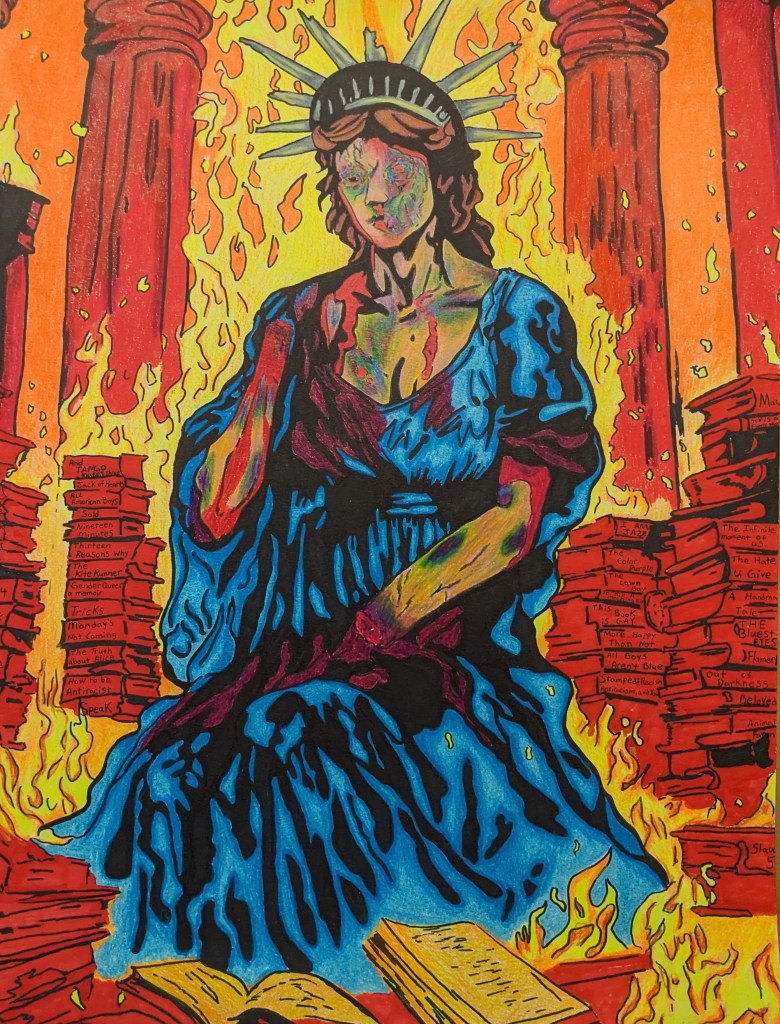
    Art, shirts, pint glasses, mugs, books, and oracle decks always make great gifts!

    http://linktr.ee/EmbalmedApple

    Thank you for supporting independent artists & authors.
    No comments on Everything Is Conscious & You’re Part of the Chorus
  • Ritual or Performance?

    November 18, 2025
    Basics, Ceremonial, Chaos, Community, Rituals, Uncategorized

    Stop Auditioning for the Gods

    (everything stated in this blog is based upon my own research, personal practice, and opinion)

    Let’s talk about stage fright, the kind that hits when you step into ritual space and suddenly feel like the gods are judging your pronunciation, your robe, and your dollar store votives.

    Ever found yourself treating ritual like a Broadway audition? Scripted lines, dramatic pauses, and the creeping sense that you’re not quite holy enough to pull this off? This is a clear sign of being stuck in performance mode.

    Performance is about impressing. Ritual is about connecting. When you start treating every spell like a show, your focus shifts. It’s no longer about communion, transformation, or intention…it’s about whether you “look” magical. Whether the aesthetic will get reactions on Instagram. Whether the spirits are giving you a standing ovation.

    Spirits don’t care about your performance. They care about your presence. They care whether you show up honestly, not whether your robes are steamed or your incantation rhymes.

    The circle isn’t a spotlight. It’s a container. It’s where magick happens, not where you prove you’re good at it.If you find yourself performing in ritual, pausing for effect, worrying about how you sound, or adjusting your movements for dramatic flair, you should ask “who is this for?” The gods already know who you are. The spirits already see past the pageantry. You don’t have to impress them.

    When Ritual Becomes Theater

    There’s a reason so many magical traditions use drama… it works. Symbolic movement, language, and costuming can be powerful tools for altering consciousness and raising energy. The problem shows up when the ritual becomes only theater, when the actions are hollow, when the focus is on aesthetics rather than intention. Are you conjuring, or cosplaying? Ritual theater is fine. Beautiful, even. Let it be a means, not the end.

    Much of the performance mindset comes from fear. Fear of getting it wrong. Fear of offending the spirits. Fear of looking silly.

    So… we script everything. We over rehearse. We try to sound mystical instead of sincere. In doing so, we lose the magick.

    Magick doesn’t require perfection. It requires engagement. It requires you to be in it, heart, breath, sweat, nerves, and all. It’s hard to channel spirit while policing your posture. You can’t open your heart if you’re worried about your lines.

    The Aesthetic Trap

    We live in a world where everything is a photo op. Your altar. Your tools. Your rituals. While beauty has its place in the sacred, it can uplift, inspire, and focus energy, it’s also easy to fall into the trap of curating rather than conjuring. If you’re more focused on how your ritual looks than what it does, you’re in performance mode.

    Magic is not a vibe. It’s a verb.

    Breaking out of Performance

    Ways you can shake off the performance energy and get back to the work:

    Strip it down. Do a ritual with no tools, no script, no costume. Just you, your breath, your intention.

    Improvise. Speak from the heart. Make it messy. Let it be real.

    Focus inward. Close your eyes. Stop worrying about what anything looks like. Tune into how it feels.

    Talk to the spirits like they’re real. Because they are. They don’t need you to be dramatic, they need you to be present.

    The Risk of Vulnerability

    Performing is safe. Vulnerability is not. Performance gives you a mask. It lets you hide. Real ritual, the kind that shakes you, remakes you, moves something, that requires showing up as yourself. You might stutter. You might cry. You might say the wrong word. Good. Let it happen.

    The gods don’t want your script. They want you.

    Group Ritual & the Temptation to Perform

    In group settings, performance pressure multiplies.

    Suddenly, your magical peers are an audience. You want to sound wise. You want your invocation to impress. You want to look the part.

    Don’t.

    Model authenticity. Model imperfection. Let others see that it’s okay to stumble, to speak from the gut instead of the glossary. If your group is more focused on choreography than connection, it’s time for a serious chat.

    Real magick looks like a shaking voice, a cluttered space, or a moment of doubt followed by sudden clarity. It’s the candle that won’t light until you stop trying so hard.

    Magick isn’t always pretty. It’s raw. It’s weird. It resists polish. Let it be awkward. Let it be clumsy. That’s where power lives, in the cracks that show our humanity.

    Burn the Script

    You don’t need to audition for the gods. You don’t need to impress your spirits. You don’t need to be the most mystical voice in the room. You just need to show up. Honestly. Fully. Without the need to perform. Step into the circle with all your human mess. Light the candle. Speak the truth. Let the ritual carry you.

    The gods aren’t critics. They’re co-creators.

    And they already said yes to you.

    No comments on Ritual or Performance?
  • Accursed Perfectionism

    November 14, 2025
    Basics, Ceremonial, Community

    Stop Trying to Know Everything Before You Do Anything

    (everything stated in this blog is based upon my own research, personal practice, and opinion)

    Stuck in magical inertia? Or are you trapped in the hole of perfectionism? You know… You’ve got shelves full of grimoires, bookmarked PDFs, annotated tarot books, and an entire playlist of podcasts called things like “Quantum Mysticism and the Alembic of Being.” You’ve done all the prep work, all the studying, all the theory. But… Your altar is still dusty. Your candles are unlit. You haven’t done a ritual since last Beltane. Why? Because deep down, you’re convinced you need to know everything before you can do anything.

    Your Ego Lies to Avoid Risk

    You’re never going to know it all. Thank the gods for that, because if magick came with a final exam, most of us would flunk. Competence addiction is perfectionism with a library card. It feels virtuous, but it’s cowardice in ceremonial costuming. Reading about magick and knowing the historical context of a spell doesn’t replace doing it.  

    Many get trapped in this form of perfectionism because they’re scared. Scared of doing it wrong. Scared of looking foolish. Scared of getting real results. So, they hide behind research. They study and study and study, hoping that if they just learn one more thing, they will finally feel “ready.”

    Magic requires vulnerability. You don’t always control the outcome. You don’t always understand the symbols. You can’t Google your way through initiation. The need to know everything is a defense against surrender. This does a deep disservice because surrender is where the power is.

    Gatekeeping Self

    Then there is self-gatekeeping, the magical masochism of telling yourself you’re not allowed to practice because you haven’t met some imaginary standard.

    “I can’t call myself a witch until I know all the correspondences.” “I shouldn’t invoke a deity until I read everything ever written about them.” “I’m not ready to cast until I memorize all the lunar phases and their emotional correspondences in four different traditions.”

    Many who came before didn’t have a manual. They looked at nature, felt something stir, and started experimenting. They didn’t wait for permission. They practiced. The door only opens when you walk through it.

    The Obsession with Lineage and “Correctness”

    Another side of this coin is lineage lust. “Unless you’ve been initiated by a high priestess in a trad coven that traces back to [insert legendary witch here], you’re just a poser.” Yeah…no. Initiation can be beautiful, and so can formal training. So can personal gnosis, or doing a working in your bathrobe with a candle and a prayer. So can getting your ass kicked by a dream and waking up changed. There is no universal Magical Bureau of Standards. There’s just you, the spirits, and what you do together.

    Ego Trap

    Some folks mistake magical scholarship for magical power. They talk circles around others. They know the Greek, Latin, and reconstructed Proto-Indo-European roots of every spell. They’ve read every book. They’ve argued on every forum. And… they’ve done exactly one ritual in the last decade. This is not the flex they think it is.

    Knowledge is power, but without practice it’s armchair wizardry. While there’s a place for theory, if your ego gets off on knowing more than everyone else, but you never engage the Mystery, you’re not a magician… You’re a magical trivia night host. Put down the thesaurus, and do the damn work.

    The Myth of Readiness

    You’ll never feel ready. Not for your first spell. Not for your first spirit contact. Not for drawing your first sigil or leading your first ritual or standing in the dark whispering names you barely understand. And that’s okay. That’s sacred. Magick happens when you move through the fear. When you show up trembling and say the words anyway.

    Readiness is a myth. The moment is now.

    The Spiral Path of Learning

    Learning doesn’t stop when you start practicing. It deepens. You read. You try. You screw up. You read again. You notice more. You try again. It’s not linear, it’s a spiral. Competence grows from contact, not from contemplation. Let your rituals teach you. Let your spirits show you. Let your mistakes initiate you. You can’t think your way into power. You have to walk it.

    The Fear of Being Seen

    A lot of the obsession with perfection is rooted in shame. “If I’m not perfect, they’ll laugh at me.” I know this one well; it held me back for way too long. While there will always be those in the world who sneer, most people respect the person who tries more than the one who postures.

    Share your practice, not as a performance, but as a process. Ask questions. Be wrong. Get curious. Fall down, get up, breathe, and light the candle again. Vulnerability is courage in action, and fortune favors the bold.

    Hall Pass for the Perfectionist

    You have permission to start before you feel ready.

    You have permission to get it wrong.

    You have permission to call yourself a witch/magician/seeker before you master anything.

    You have permission to learn by doing, not just by reading.

    You have permission to not know the answers, and still practice.

    Your practice doesn’t have to be perfect. It has to be yours.

    Perfectionism will keep you stuck forever. It will whisper, “Just one more book.” “Just one more course.” “Just one more month of planning.” ”Then, only then, I’ll be ready…” Then, in a blink…and your altar is covered in dust, your dreams are dim, and your magic feels like a theory project. Break the cycle. Light the damn candle. Mess it up. Laugh. Learn. Do it again. Knowledge is only power when paired with action to form wisdom.

    No comments on Accursed Perfectionism
  • Hexing Yourself for Fun and Insecurity

    November 8, 2025
    Basics, Community

    The Dangers of Chronic Self-Deprecation

    (everything stated in this blog is based upon my own research, personal practice, and opinion)

    Let’s get one thing straight from the jump: being able to laugh at yourself is a magical gift. It means your ego hasn’t taken over like a demon with a grudge and a grimoire. It means you have perspective. It means you know you’re human. Great. We love that.

    But here’s the shadow side: when your humor becomes your default defense mechanism, your magical path can turn into a slow-motion self-hex. One joke at a time. One sarcastic shrug. One dismissive “I’m not a real witch, I just collect shiny rocks and cry under full moons” too many.

    Welcome to the world of chronic self-deprecation, the sneaky, funny, socially acceptable way to sabotage your entire magical practice. Pull up a chair bestie, we’re lighting a black candle, staring into the mirror, and naming this beast before it eats any more of your power.

    Humor or Hex?

    The line between humility and harm is thinner than a ritual blade. Self-deprecating humor walks that line and sometimes stumbles drunk right over it into the abyss.

    When you joke about being a fraud, or about your spells being weak, or about your connection to the divine being “mostly vibes and caffeine,” it might get a laugh… But underneath the laugh is a quiet erosion of belief. Oh, and your subconscious? That tricksy little goblin? It takes everything at face value.

    You are what you say, especially when you say it over and over.

    What begins as self-aware comedy can quickly become a mantra. If the mantra is “I’m just pretending,” your magick will start to reflect as much.

    The Social Spell of Self-Doubt

    Here’s where it gets sticky: self-deprecating humor is socially rewarded. It’s charming. It puts people at ease. It signals humility. In a world full of spiritual influencers taking themselves Very Seriously™, your ability to laugh at your practice makes you relatable.

    Being relatable doesn’t mean being powerless. You can be humble without being self-erasing.

    If your every conversation about your practice includes a disclaimer “I mean, I’m not like… a real witch or anything”, you’re not just managing expectations, you’re creating energetic disclaimers that weaken your own authority. You’re casting a spell of invisibility on yourself every time you speak.

    Fear in Fancy Dress

    Self-deprecation often masks fear. Fear of being judged. Fear of being wrong. Fear of taking up space in a world that loves to tear down anyone who dares to say, “Yes, I believe in magick, and I practice it.”

    So, we preempt the attack. We laugh first. We say, “I know this is silly,” so no one else can call us out. We throw ourselves under the broomstick to avoid scrutiny.

    This is a trauma response wrapped in wit. And it’s valid, but not sustainable. Your magick doesn’t require you to be fearless. It requires you to be present. Presence can’t grow in soil poisoned by constant self-dismissal.

    The Magician as Court Jester

    There’s a seductive archetype in magical circles: the trickster. The jester. The one who laughs in the face of dogma, who plays with paradox, who doesn’t take themselves too seriously.

    It’s powerful. Trickster energy has its place. But when you become the only one making jokes, when you never drop the mask long enough to let the magick touch you, you become a parody of your own practice.

    And the spirits? They’re not laughing. They’re waiting for you to get real.

    Spellcasting with a Side of Apology

    Let’s talk about tone. If your rituals feel like they come with a built-in apology, “Sorry I’m doing this wrong” energy, then you’re layering your work with doubt. You’re blending your intention with ambivalence. That’s like trying to bake bread with expired yeast.

    You don’t need to be 100% confident all the time. That’s not realistic. You do need to stop poisoning your workings with preemptive disqualification.

    Say the words like you mean them, not like you’re hoping no one overhears you and calls you cringey.

    When Humor Becomes Habit

    The danger of chronic self-deprecation is that it becomes default. You don’t even think about it. Someone compliments your altar, and you automatically say, “Oh, it’s just junk I threw together.” Someone admires your insight, and you deflect with, “Pfft, I’m just making it up as I go.”

    Over time, this reflex becomes ritual.

    You’re teaching your subconscious that you don’t deserve to be seen as competent, wise, or powerful… then you wonder why your workings feel flat. Why your intuition feels muddy. Why the magic doesn’t land like it used to.

    Rewriting the Script

    Here’s the good news: you can rewire your default.

    When you want to make a joke at your own expense, pause. Ask: is this true? Is this necessary? Is this helpful?

    Start affirming your power out loud, even if it feels fake at first. “I am a practitioner. I trust my magick. My work matters.”

    Receive compliments. Practice saying, “Thank you.” Not “thank you but…” Just “thank you.”

    It’s not about arrogance. It’s about integrity.

    Humility isn’t thinking less of yourself. It’s thinking of yourself accurately. And accurately? You’re a person who shows up, learns, grows, and does the damn work. That’s not laughable. That’s admirable.

    Finding Humor Without Disrespect

    Can you be funny without undercutting your practice? Absolutely. Humor is sacred. It’s part of the divine trick. The gods themselves are pranksters.

    Sacred humor is rooted in reverence. It pokes fun at rigidity, not at devotion. It mocks pretension, not sincerity.

    Make jokes about the absurdity of chasing a spirit through a dreamscape while holding a glowing egg. Laugh about the time your cat ruined your elaborate ritual. Just don’t joke yourself out of your own power.

    Use humor to lighten the load, not to set your temple on fire.

    Community Check-In: Call Each Other In

    Sometimes we enable each other’s self-deprecation without realizing it. We laugh along. We nod. We bond over our mutual impostor syndrome.

    But what if, next time, we said:

    “Hey, that sounded like you were putting yourself down, is that how you really feel?”

    “I think your work is valid, even if you’re not sure.”

    “You don’t have to be perfect to be powerful.”

    We can hold space for each other’s doubt without feeding it. We can remind each other what’s real when the inner troll gets too loud.

    The world knocks us down enough; don’t self bully. Every time you dismiss your work, your insight, your devotion, you’re casting a spell. A binding one. A silencing one. A glamour that hides your light.

    You’re too damn magical for that nonsense!

    Next time the words start to slip out, “I’m just pretending,” “I’m not a real witch,” “It’s all just vibes anyway” …

    Pause.

    Breathe.

    And remember: you are not a joke. Your magick is not a punchline. You are here. You are doing the work. You are enough.

    Say it out loud. Say it like you mean it. Say it like the spirits are listening… Because they are.

    No comments on Hexing Yourself for Fun and Insecurity
  • The Comparison Curse:

    November 6, 2025
    Basics

    How Aesthetic Envy Kills Your Craft

    Let’s be honest: nothing torpedoes a perfectly good working faster than opening your phone and seeing someone else’s altar that looks like it was styled by a team of Renaissance art historians on ketamine.

    You’ve just finished a decent working, the incense wafted correctly, your circle didn’t collapse, and your invocation didn’t accidentally call in your ex… but then you log on, and BAM… there’s some ethereal priestess surrounded by crystal skulls, six live snakes, and a golden goblet blessed by thirteen bloodlines. She’s glowing. She’s levitating. Her caption includes seven languages and a reference to a text you think you saw mentioned in a footnote once.

    Suddenly, your spell feels like it was written in crayon. On a napkin. In a Waffle House.

    Welcome to the Comparison Curse, a modern plague that feeds on your attention, confidence, and magical momentum. Let’s rip off the velvet glove and expose how aesthetic envy and curated magical lifestyles can turn powerful witches and magicians into insecure, paralyzed dabblers.

    Let’s break this down, remove it at the root, and get your flow back.

    The Digital Scrying Mirror of Doom

    We’ll start where it hits hardest: the scroll.

    You don’t even have to be trying to compare yourself. You just open Instagram, Pinterest, or WitchTok for a little inspiration and, oops, you’ve just involuntarily summoned the spirit of inadequacy. It’s wearing rings from Etsy, has a custom wand carved from a fallen oak in a Druid grove, and it wants to talk to you about your lack of aesthetic cohesion. Social media is a performance space. It’s a stage, not a reflection. You’re not seeing magic. You’re seeing branding. Curation isn’t authenticity. Filters aren’t devotion. Perfectly arranged altars with expensive tools are often more about image than invocation.

    Aesthetic Is Not Authority

    Repeat after me: pretty doesn’t equal powerful.

    Having a color-coordinated altar doesn’t make your spirit contact more legit. Your magic isn’t stronger because your robe matches the cover of your moon phase journal. And no, that $500 obsidian sphere won’t suddenly download divine truth into your chakras.

    There’s nothing wrong with beauty. Beauty can be sacred. But… when you conflate visual appeal with magical efficacy, you set yourself up for permanent insecurity. There’s always someone prettier, wealthier, and better at Lightroom presets.

    Magical power comes from practice, presence, and will, not from looking like a sponsored post.

    The Myth of the Perfect Practitioner

    You ever see someone online and think, “Wow, they really have it all figured out”? Yeah. They don’t. The illusion of the flawless witch or omniscient mage is a collective hallucination. Nobody’s posting their ritual misfires, their moments of doubt, their “I just cried in the tub because Mercury retrograde ruined everything” days.

    We buy the image. We internalize it. We think, “They’re doing real magic. I’m just playing dress-up.”

    Here’s your counterspell: The perfect practitioner doesn’t exist. We are all winging it. The deeper the magician, the more aware they are of how much they don’t know. Humility is the sign of someone who’s actually doing the work.

    How Envy Destroys Engagement

    Comparison doesn’t just make you feel bad, it actively dismantles your magical practice. You stop casting because your tools don’t look “good enough.” You stop journaling because your Book of Shadows isn’t a hand-illuminated grimoire with gilded edges and pressed rose petals. You stop meditating because you don’t have the right singing bowl.

    The Comparison Curse says: “If it’s not perfect, it’s not worth doing.”

    That is poison. Magic isn’t about perfection. It’s about presence. It’s about doing the damn thing with what you’ve got, where you are, asyou are.

    The Capitalist Colonization of the Craft

    Let’s drag the real demon into the circle: capitalism.

    Much of what you see online is marketing, even if it doesn’t look like it. Influencers are selling courses, books, candles, aesthetics, affiliate links, and themselves as a brand. And they’re doing it in a system that equates worth with wealth. When you feel like crap because your altar looks like a garage sale and theirs looks like the Met Gala of witchcraft, remember: it’s not about power. It’s about profit.

    You are not less magical because you’re not rich. You are not less spiritual because you don’t look like a moonlit vampire sorceress. You are not broken because you don’t perform your practice for public consumption. Your craft is not content.

    Real Magic Is Gritty

    The most powerful rituals I’ve ever seen?

    Done in basements.

    Surrounded by clutter.

    Performed by exhausted people with messy hair and zero aesthetic sense.

    And you know what? The spirits showed up. The power was real. The transformation happened. Magick responds to sincerity, not set design. Your kitchen witchery with discount herbs and a Bic lighter? That’s valid. Your muttered incantation in a hoodie with last night’s pizza box on the table? That counts. Real magic is scrappy. It shows up in the cracks, the imperfections, the places you thought were too mundane to matter.

    Turning the Curse Into a Catalyst

    Envy isn’t inherently evil. It’s a signal. It’s saying: “I want that.” So listen. What specifically do you want? If you’re admiring someone’s altar, is it the objects? Or the sense of devotion? If you envy someone’s lifestyle, is it their wealth, or their discipline? Their focus? Their sense of connection?

    Use that. Let it inform your practice. Let it inspire action, not paralysis. Turn jealousy into journaling. Turn aesthetic envy into altar-building with what you do have. Turn doubt into drive. Your magic is between you and the Mystery. It doesn’t need to be pretty. It needs to be done.

    There is no award ceremony at the end of this path. No spiritual gold stars. The gods don’t care how your practice looks. They care whether you show up.

    Close the app. Light the candle. Say the words. Let the energy move. Trust yourself.

    You are already enough. You are already magick. You are already real.

    ~~~~~~~~~~~~~~~~~~~~~~~~~~~~~~~~~~~~~~~~~~~~~~~~~~~~~~~

    Monthly Mindfulness

    ~ From the Walking With the Gods icon deck ~ Coming to Kickstarter Spring 2026 ~

    Nuit

    As the divine feminine principle, Nuit is the mother of all things and the field in which all existence unfolds. In Liber AL vel Legis she declares, “Every man and every woman is a star,” affirming that each soul is a unique expression of divine will, destined to shine in its own orbit. She is not a distant deity, but the very space in which life occurs. She is the totality of being, the sacred void, and the infinite womb from which all arises. Nuit invites worship through love, joy, and the ecstatic realization of one’s True Will. She is the mystery of the night sky, the promise of limitless becoming, and the divine embrace that holds all existence.

    She is the sacred void that births every spark; each soul a star, each star a hymn of will. When she appears in a pull it is to remind us that joy is worship. That endless night is not emptiness; it is possibility.

    1 comment on The Comparison Curse:
  • Talking to Wood:

    October 27, 2025
    Basics, Dreams/Oracle/Divination

    A Spirit Board Overview for the Occult-Curious

    (everything stated in this blog is based upon my own research, personal practice, and opinion)

    You’ve probably seen one. Maybe it was in the attic at your grandmother’s house, maybe it was a prop in a horror movie, maybe it was shoved on the back shelf at a thrift store between half-melted candles and a VHS copy of The Craft. A rectangular board covered in letters, numbers, and the words YES and NO, with a little pointer called a planchette.

    The spirit board, Ouija, if we’re being brand-specific, has a reputation. For some, it’s a harmless parlor game. For others, it’s a forbidden door you should never, ever touch. For Hollywood, it’s practically a union actor, showing up in every supernatural flick from here to eternity.

    Here’s the truth most people don’t tell you: spirit boards aren’t cursed. They’re not inherently evil. They’re tools. And like any tool, they can build or break depending on how you use them. A hammer can build a temple or smash a window; the hammer itself doesn’t decide.

    Let’s talk about what these boards really are, where they came from, why they work, and how to use them without needing an exorcist on speed dial.

    A Brief Detour Into History

    Despite the spooky legends, spirit boards don’t go back to the pyramids. They weren’t handed down from Druids or carved into Babylonian tablets. The Ouija, as we know it, is a 19th-century invention, just a little younger than the telephone.

    They were born in the era of Spiritualism, a movement that took root in America and Europe in the mid-1800s. Spiritualists believe that the living can communicate with the dead, not as a sideshow but as a continuation of love, family, and dialogue. It is a path of comfort, not fear.

    In parlors and camp meetings, people experimented with ways to reach across the veil: table raps, coded knocks, automatic writing, trumpet séances where voices floated through the dark. The talking board fit right in. Easy, portable, simple to use, it democratized mediumship. You didn’t need to hire a professional; you could set one up on your kitchen table.

    Here’s a story worth pausing on. In the late 1880s, a businessman named Charles Kennard and his friends were tinkering with this new “talking board” idea. They brought Elijah Bond, a patent attorney, into the mix. Bond’s sister-in-law, Helen Peters, was a medium, and she decided to ask the board what it wanted to be called. The planchette spelled out: O-U-I-J-A. When asked what it meant, the board allegedly replied, “Good luck.”

    Helen Peters happened to be wearing a locket with a portrait of a novelist named Ouida inside, which may explain the spelling, but in that moment, the board quite literally named itself. Later, when they filed for a patent in 1891, the examiner asked for proof the device worked. The board spelled out his name. Patent granted. In a sense, the Ouija board talked itself into existence.

    So, no your Ouija board isn’t an infernal relic. It’s a Victorian invention, birthed in a culture fascinated by spirit contact, christened by its own letters, and popularized by people who wanted a simple, accessible tool for communication.

    How It Works (and Why Science and Spirits Agree More Than You Think)

    So let’s address the real question: does the board actually “work”?

    Science will tell you about the ideomotor effect, tiny, unconscious muscle movements that make the planchette glide around without you realizing it. That’s very real. Your body is capable of micro-movements you’re not aware of, and they can be guided by expectation, imagination, or suggestion.

    Here’s where the occult perspective dovetails nicely: trance states, unconscious nudges, and subtle movements are exactly how spirit communication often comes through. It’s not about booming voices or Hollywood fireworks. It’s whispers, impressions, and shifts you can barely feel, until they spell out something coherent.

    Think of it like tuning an old radio. The static is your unconscious movement. Your intention is the dial. And if something, or someone, wants to come through, they can use that static as a bridge. Sometimes it’s just your deeper self speaking back. Sometimes it feels like more. Either way, the board becomes the microphone, not the voice itself.

    Why the Bad Reputation?

    The short answer: fear sells.

    Horror movies made the Ouija board their poster child. If filmmakers showed the truth, most sessions are people squinting at slowly spelled-out “HI” or “YES”, audiences would walk out asking for their money back. Instead, Hollywood taught generations to expect spinning furniture and sulfuric demons the moment the planchette moved.

    Add to that the cultural anxiety that comes whenever people (especially women, let’s be real) claim agency in contacting spirits outside traditional religious authority. What was empowering in one century became scandalous in the next. The board got labeled dangerous because people feared what it represented: direct, personal access to the unseen.

    But the truth is simpler. A spirit board is a neutral tool. Nothing steps through unless you open the door and invite it. And you always have the power to shut the door again.

    Why Use One At All?

    Because sometimes, you want to listen differently.

    Maybe you’re looking for comfort from ancestors. Maybe you want to train your intuition. Maybe you’re exploring occult practice and want a tactile way to focus. Spirit boards can offer:

    A meditative mirror of your own subconscious.

    A ritual framework for ancestral connection.

    A communal practice that builds group focus.

    A form of divination, slower than tarot but sometimes just as striking.

    They’re not the only way to reach across, but they’re a powerful option.

    The “How-To” Without the Hysteria

    If you’re curious enough to try, here’s how to keep it grounded and safe.

    First, set the mood but don’t overdramatize. Light a candle, dim the lights, maybe say a prayer or cast a circle if that’s your style. You’re not making a horror movie set; you’re creating focus.

    Second, pick your company carefully. Fearful, drunk, or mocking participants make for messy sessions. Choose calm, respectful people who can treat the work with curiosity, not chaos.

    Third, set boundaries. A simple statement works: “We invite only benevolent and truthful voices.” Intent is your firewall.

    Fourth, rest your hands lightly. No pushing, no showing off. Just let it glide.

    Fifth, ask good questions. Yes/no questions are easiest. Open-ended ones can work, but don’t expect the board to dictate entire novels.

    The last step, always close. Say thank you. Say goodbye. Clear your space. Ending well matters.

    Humor Helps

    If you think every spirit board session is full of wisdom from beyond, prepare for disappointment. Sometimes you get nonsense letters. Sometimes the board just spells “HIHIHIHI.” Sometimes it gives you advice like “EAT MORE VEGETABLES.”

    And that’s fine. Humor keeps you from spiraling into fear. If you can laugh when the planchette spells POTATO, you’re already safer and more grounded. Spirits have personalities. So does your subconscious. Expect some mischief along the way.

    When the Board Became a Muse

    Not all spirit board stories are about silliness or mischief. Some are about unexpected depth. Take Pearl Curran, a St. Louis housewife in 1913, who sat down with a friend and a Ouija board. What started casually turned into one of the most famous cases in board history.

    Through the planchette, Pearl claimed to be in contact with Patience Worth, a woman from 17th-century England who never made it across the sea. What followed was astonishing: over the next 25 years, Pearl produced poems, plays, and novels dictated by Patience, more than 400,000 words. The language was archaic, the imagery rich, and some of the work won praise from critics who were baffled by how a woman with no formal literary training could produce such material.

    Was Patience Worth truly a spirit? Or was Pearl tapping into her own unconscious genius through the board? The debate continues. Either way, the Ouija board was the medium through which this torrent of creativity flowed. It wasn’t horror, it was art. It’s a reminder that sometimes, these tools open not to monsters, but to inspiration.

    Folding the Board Into Magical Practice

    For the occult practitioner, spirit boards aren’t just novelties; they can be woven into deeper work. Use them during planetary hours to connect with certain energies. Place them on ancestor altars as a communication tool. Combine them with scrying or meditation for layered practice.

    The board isn’t the conversation itself. It’s the megaphone. What matters is who you’re speaking with, and how you’re listening.

    The Real Risk: Fear

    Let’s be blunt: fear is the real hazard here. Not spirits, not cardboard. Fear.

    Fear turns creaks into demons. Fear convinces you the planchette is moving with sinister intent instead of your twitchy pinky. Fear makes you forget you’re the one in control.

    Courage in occult practice isn’t about being fearless; it’s about being steady in the unknown. If you can sit with a moving planchette and not spiral, you’re building the resilience every magical path requires.

    Manners Matter

    Whether you’re speaking to ancestors, spirits, or your inner self, basic etiquette applies. Don’t bark demands. Don’t ask for winning lottery numbers. Don’t treat it like a joke.

    Say please. Say thank you. And while we’re at it… don’t drag a board into a graveyard just to “make it spooky.” That’s not edgy. That’s rude.

    So What Do Spirit Boards Really Teach?

    They teach you how to listen. How to sit in the space between what you know and what you hope. How to recognize that conversation doesn’t end with death. How to work with mystery without giving in to fear.

    They’re not the most glamorous tool, but they’re one of the most accessible. Anyone can use one. In that accessibility is a kind of magic: the reminder that the veil between worlds is thinner than we think, and that anyone can touch it.

    Let’sdrop the fearmongering once and for all. Spirit boards aren’t cursed relics. They’re quirky, historic, sometimes profound tools for communication and reflection. They’ve been used for comfort, curiosity, and communion for over a century, and they’ll keep being used as long as people have questions and want answers.

    The real magic was never in the board. It’s in you. The board just gives your curiosity, your intention, and maybe your ancestors a place to spell themselves out.

    Next time you see one, don’t recoil. Don’t assume it’s a trap. If you feel called, sit down, breathe, and say hello.

    Who knows what you’ll hear.

    No comments on Talking to Wood:
  • Drag Makeup as Ritual:

    October 18, 2025
    Basics, Community, Glamour, Rituals, Uncategorized

    The Magick of Resistance, Gender-Bending, and Sacred Foolery

    ( everything stated in this blog is based upon my own research, personal practice, and opinion)

    When Eyeliner Becomes a Spell

    Drag makeup isn’t just about looking sickening (though, yes, that too). It’s paint as prayer, contour as conjuration, lashes as little wards against a world that wants to shrink you down to something beige and manageable. Drag queens, kings, things, and divine in-betweens don’t just get ready…they perform ritual.

    Every swipe of highlighter, every precisely cut crease, every rhinestone glued at 1 a.m. is an act of magick. It’s rebellion in sequins, glamour as a weapon, absurdity as sacred offering. The sacred gender bend and the archetype of the holy fool shimmer through drag like glitter in a carpet…once they’re in, they never leave.

    Drag makeup is war paint, clown paint, prayer paint. And if you don’t believe that? Darling, let me take you on a little pilgrimage through the altar of the vanity mirror.

    The Altar is the Vanity

    Drag begins in front of a mirror that doubles as a portal. The vanity table, cluttered with powders and palettes, is the altar for this ritual. Where some folks light candles and chant, drag artists crack open a Kryolan pan and say, “Not today, Satan, and if it is today, at least let me look fierce while you try me.”

    The brushes? Wands. The glitter? Salt for the circle. The setting spray? Holy water with extra attitude. You sit down one way, you come up another…and that’s invocation, baby.

    Gender-Bending as Sacred Act

    Let’s be clear: drag doesn’t just “play with gender.” It dismembers gender, rethreads it, sews it together with sequins and duct tape, and sends it out to lip sync for its afterlife.

    The sacred gender bend is about showing that gender was never a cage; it’s clay. To feminize the masculine or masculinize the feminine isn’t parody, it’s invocation. You’re calling on archetypes bigger than the binary.

    The Queen invokes the goddess, priestess, empress. She doesn’t just tuck, she transubstantiates.

    The King channels warriors, tricksters, father-gods. He doesn’t just draw on stubble, he chisels myth from bronzer.

    The Nonbinary Drag Thing tears the whole script up and says, “My pronouns are glamour/chaos, thanks.”

    Every painted brow arch screams: “Your categories are cute, but my existence is divinely inconvenient.”

    Glamour Against Oppression

    Here’s the truth: drag makeup is dangerous. Always has been. Men in wigs and lipstick were once criminal. Gender nonconforming expression was (and in some places…still is) outlawed.

    People get beaten, jailed… killed for it. And still, the paint goes on.

    Why? Because drag makeup flips the bird to the systems that want conformity. It’s defiance with contour. It’s standing in the ruins of patriarchy with a ring light and saying, “Oh, we’re doing camp apocalypse chic tonight darlings.”

    Resistance isn’t just protest signs; it’s an intensity that says, “I dare you to look away.” The most radical thing is to exist loudly in a world that demands your silence. Drag performers have always understood that survival isn’t beige…it’s Technicolor.

    The Ritual Steps of Transformation

    Every drag performer has their own ritual, but the structure is uncannily universal. Like liturgy, it has stages:

    The Bare Face – the vulnerable, mortal state. Acknowledging the self before transfiguration.

    The Blocking of Brows – destruction of the old order, clearing the temple walls for new icons.

    The Foundation – the new skin, clay for sculpting identity.

    Contour and Highlight – death and resurrection. Shadows carve bone where none existed, light conjures divine geometry.

    Eyes and Lashes – windows of the soul become projectors of archetype. The lash? The sword.

    Lips – the final seal. The mouth is the oracle. Painted red, black, blue, or green, it’s the vessel of spellcasting.

    By the end, a new entity walks forth, both human and divine parody of humanity.

    The Sacred Fool Archetype

    Drag is never just sacred; it’s also ridiculous. That’s the point.

    The sacred fool appears in nearly every tradition: clown-priests in Indigenous cultures, jesters in medieval courts, trickster gods from Loki to Coyote. Their role? To destabilize authority with absurdity, to expose truth by being intentionally “foolish.”

    Drag queens and kings are modern holy fools. Walking in size 15 stilettos? That’s devotional absurdity. Drawing a six-inch eyebrow? That’s mocking the seriousness of beauty standards. Splitting a wig mid-number? That’s divine comedy, and the crowd goes wild.

    The sacred fool isn’t just clowning, it’s holy chaos. Drag embodies that, refusing to let the world calcify into boring binaries.

    Drag Makeup as Spellcraft

    Occultists know glamour magick: the ability to alter perception, to be seen as something else. Drag makeup is glamour turned up to eleven.

    Protection Spells: Foundation thick enough to withstand police tear gas or at least a sweaty Pride parade.

    Invocation: Drawing eyeliner so sharp it channels Athena, Beyoncé, and your grandmother’s disappointment simultaneously.

    Banishing: Powdering your face until no hater can get a foothold.

    Drag performers are walking talismans. Their faces are sigils. The very geometry of the makeup, triangles of contour, circles of blush, lines of eyeliner, form ritual diagrams of transformation.

    The Aesthetic of the Gods

    Drag makeup often leans into camp, and camp is sacred exaggeration. Camp says, “Nothing is too much.” Camp is a shrine to excess, a devotion to over-the-top that reveals how absurd “normal” actually is. Drag makeup as camp is basically Dionysus cackling in contour. It is divine intoxication rendered in highlighter.

    Community as Congregation

    Every ritual needs witnesses. Drag doesn’t live in the mirror, it thrives on the stage. The audience is the congregation, and applause is the amen.

    When a queen steps out, the crowd gasps. That gasp is the recognition of divinity. When a king stomps the floor, the room vibrates like temple drums. That’s ritual resonance.

    Drag shows are churches where the hymns are lip-syncs, the wine is vodka Red Bull, and the holy spirit is a wig reveal.

    Drag Makeup and the Queer Mysteries

    Queer people have always been keepers of mysteries. We live in the liminal. Drag makeup is an initiation into that mystery. It says:

    You can survive by becoming.

    You can bend what was rigid.

    You can be holy and hilarious in the same breath.

    When the world tries to erase you, painting your face becomes a sacred refusal. When the law says you can’t exist, you carve existence in contour.

    Resistance in a World of Regression

    We live in a time where queer rights are under assault. Where drag bans are proposed as though lipstick is the real threat to society (spoiler: it isn’t). Drag makeup in this climate isn’t just art…it’s resistance.

    Every queen who paints a face in Tennessee, every king who sharpens a jawline in Florida, every performer who beats a mug in small-town bars across the globe, they’re frontline warriors. Their weapons? Lipstick, lashes, and laughter.

    This isn’t hyperbole. This is survival.

    Glitter is Forever

    Here’s the kicker: drag & drag makeup aren’t going anywhere. Glitter, like queerness, is impossible to eradicate. You’ll find it weeks later… in places you didn’t even know you had.

    That’s the truth of drag-as-ritual. Once you’ve encountered the sacred fool, the gender-bent divinity, the spell of eyeliner sharp enough to cut through fascism, you can’t unsee it.

    Drag makeup is messy, holy, hilarious, defiant, and divine. It’s ritual. It’s resistance. It’s magick.

    The next time you see a drag performer painting their face, know you’re watching more than a beauty routine. You’re watching someone build a shield, invoke a god, clown the devil, and resist erasure… all while looking drop-dead gorgeous.

    If that’s not sacred, what the hell is?

    No comments on Drag Makeup as Ritual:
  • Pleasure & Power

    October 16, 2025
    Basics, Ceremonial, Chaos, Rituals

    and the Weirdest Productivity Hack Ever Invented

    (everything stated in this blog is based upon my own research, personal practice, and opinion)

    Ever notice how the world acts like pleasure is suspicious? Like the second you admit that feeling good might actually mean something, someone shows up clutching a Bible or a business plan telling you to “be productive” instead?
    Well, jokes on them, because pleasure is productivity. It’s the original renewable energy source, and sex magick is basically humanity’s earliest operating manual for it.

    Before you roll your eyes, no, this isn’t about Hollywood-style orgies where everyone’s chanting naked under a blood moon. (Though, let’s be honest, that does sound like an interesting Friday.) Sex magick, when you strip off the incense and performance, is really about harnessing erotic energy, that electric, body-deep life current, and aiming it somewhere intentional.

    It’s the oldest “manifestation hack” in existence, but with better lighting and way fewer pastel vision boards.

    So, What the Hell Is Sex Magick?

    Imagine you could take the intensity of an orgasm, or the slow, building heat of arousal, or even the quiet hum of sensual curiosity, and instead of just letting it fizzle out, you directed it. Into art. Into healing. Into creating the kind of life that actually turns you on to be alive.

    That’s sex magick.

    It’s not about who you sleep with or what parts you’ve got. It’s not even necessarily about sex in the physical sense. It’s about energy, focus, and choice. It’s the act of saying, “This power is mine. I get to use it, not just spend it.”

    If that sounds radical, that’s because it is. We live in a culture that sells sex while simultaneously shaming it, that monetizes your desire but forbids your agency. Sex magick looks at that system, laughs, and says, “No thanks, I’ll generate my own power grid.”

    Humans Have Been Doing This Forever

    You know how everyone acts like “sex magick” is a new-age trend invented by someone with a moon tattoo and a Patreon? Yeah, not even close.

    Humans have been mixing the erotic and the sacred since we figured out that both make our brains light up like fireworks. Ancient Mesopotamian priests performed sacred marriages between deities and rulers, full-on ritual unions meant to bless crops and kingdoms. In Greece, Dionysian rites were essentially divine raves where ecstasy was prayer.

    In India, Tantra explored sex as a spiritual technology long before anyone in the West could spell “chakra.” Authentic Tantra, by the way, isn’t “how to last three hours while staring into someone’s eyes.” It’s the art of turning the body into a temple of awareness, where every breath, every movement, every sensation is a doorway to the divine.

    Then, Europe came along with its alchemists, and we all love those nerds with flasks and metaphors. They weren’t just turning lead into gold; they were experimenting with the union of opposites, masculine and feminine, sulfur and mercury, sun and moon. Sometimes symbolically, sometimes very literally. (Let’s just say a lot of medieval “experiments” involved less metallurgy and more moaning.)

    And of course, the twentieth century brought Aleister Crowley, the controversial poster child of “doing too much.” Crowley basically said, “What if we treated orgasm like rocket fuel for prayer?” He blended sex, ritual, and willpower into something equal parts brilliant and chaotic. You don’t have to like the guy, but he did kick the door open for modern magical sexuality.

    Then came the feminists, the queers, the revolutionaries of the 1960s and 70s who looked at repression and said, “Nah, we’re taking our bodies back.” Sex magick became protest, liberation, and self-healing. It became ours again.

    So no, this isn’t new. It’s just been through a few outfit changes.

    Okay, But What’s “Erotic Energy”?

    Let’s kill the mystique: erotic energy isn’t some glittery pink aura swirling around your pelvis. It’s just… life. It’s what makes flowers bloom and humans flirt and artists obsess. It’s your biological, emotional, creative fuel, the pulse behind everything you do that makes you feel alive.

    When you’re turned on, your brain releases dopamine, oxytocin, and endorphins. Your body floods with nitric oxide. Your mind shifts into trance. Congratulations, you’re already halfway to magick. The body knows how to alter consciousness; it’s just waiting for you to give that energy somewhere to go.

    That’s the difference between sex and sex magick. Sex happens. Sex magick happens on purpose.

    Solo, Partnered, and Everything Between

    People always want to know if you have to be in a relationship to do this. Short answer: absolutely not. Longer answer: most people start solo because it’s easier to stay focused when no one’s trying to impress anyone.

    Solo sex magick is powerful. You’re the energy source and the spellcaster in one. You can build erotic charge through masturbation, breathwork, fantasy, or even creative expression. At the height of that energy, whether or not you orgasm, you channel it toward your intention.

    Partnered sex magick adds complexity and intensity. Two (or more) energies blending, syncing, amplifying each other, it’s a literal ritual circuit. But it only works if everyone’s on the same page: open, consenting, clear on boundaries and goals. Otherwise, it’s just sexy chaos.

    Here’s a fun truth: orgasm isn’t required. Edging, slow build, abstinence, touch without release, all of it works. The key isn’t what your body does, it’s what your mind is doing while it happens.

    Think of arousal as a volume knob, not a light switch. You can turn it up, down, or channel it sideways into something entirely different.

    Everyone’s Invited (Seriously)

    Let’s get one thing straight, and also, delightfully, not straight.

    Sex magick is for all bodies, all genders, all orientations, all experiences. You don’t need to fit into a hetero-missionary mold to be divine. The energy doesn’t discriminate, so why should you?

    Queer sex magick? Completely valid. It’s actually one of the most potent expressions of creative energy, because it defies rigid binaries. It’s living proof that divinity isn’t confined to “masculine” and “feminine” boxes. It’s the universe playing jazz instead of marching band.

    Kink and BDSM? That’s practically a masterclass in ritual design. Negotiated consent, power exchange, altered states, intentional sensation, that’s magick with safewords. The best scenes have as much structure as a good spell, and aftercare is just grounding by another name.

    Asexual and graysexual practitioners? You belong here too. Sex magick isn’t about sex acts; it’s about energy. You can build erotic charge through touch, imagination, creativity, or connection. You don’t need to want intercourse to understand sensual aliveness. Some of the most powerful sex magick workers I’ve met are aces who channel their erotic current into art, prayer, or pure joy.

    At the end of the day, erotic energy belongs to whoever’s alive enough to feel it. If you’ve got a pulse, congratulations, you qualify.

    So How Do You Actually Do It?

    First, you set an intention. Not “I want to be hotter” or “I want them to text me back.” Think deeper. What are you trying to become? What are you ready to release? Maybe it’s body confidence. Maybe it’s healing shame. Maybe it’s writing that damn novel you’ve been putting off.

    Then, set the scene. Light candles if you want. Play music that makes you feel alive. Maybe that’s soft chanting; maybe it’s Nine Inch Nails. Your altar can be a silk-covered table or just your bed with the laundry finally put away.

    Start building energy. Touch yourself. Move. Breathe. Feel what pleasure actually feels like, not performative, not goal-oriented, just present. Let that energy rise.

    When you hit that peak, whether orgasm or just that dizzy “I could explode into stardust” feeling, focus. See your intention like it’s happening now. Let that wave crash through it, feed it, ignite it.

    Then: breathe. Ground. Eat a snack. Drink water. Journal. Aftercare isn’t optional. You’ve just done emotional surgery with your libido; treat yourself like a tender deity afterward.

    If your brain tries to distract you mid-practice with “Did I pay that bill?” or “Where’s my other sock?”, that’s fine. It’s part of it. Just bring your mind back gently. Magick doesn’t require monk-like concentration. It requires willingness and humor.

    Why Even Bother?

    Because reclaiming your erotic energy changes everything.

    When you stop outsourcing your pleasure, to other people, to porn, to social approval, to algorithms, you start reclaiming your agency. You stop moving through the world like a consumer of experience and start moving like a creator.

    Sex magick teaches you that your body is a temple and a laboratory. You get to experiment, to play, to explore. You heal not by denying desire but by meeting it with reverence.

    It’s a practice of sovereignty. Of saying, “My pleasure belongs to me. My power belongs to me.” And when you build that relationship with your own energy, you become harder to manipulate. The world’s constant noise loses its grip. Shame stops being a language you speak.

    Also? It’s fun. And in times like these, joy is a radical act.

    But Wait…Is It Safe?

    Good question, and bless you for asking. Because no amount of rose quartz will save you from a bad boundary.

    Consent is non-negotiable. If you’re working with others, talk. Be explicit. Discuss boundaries, desires, and aftercare before you start. And if you’re solo, check in with yourself, too. Self-consent means listening to your body’s “no” as much as your “yes.”

    Sex magick can also stir up old trauma. Sometimes you’ll hit emotional depth you weren’t expecting. That’s normal, and it’s not something to push through. Stop, breathe, journal, and reach out for support if you need it. Magick and therapy aren’t enemies; they’re allies.

    And please, let’s stay in reality: magick doesn’t replace condoms or birth control. Energy work won’t prevent STIs or pregnancy. Protect your body as much as your aura.

    If you struggle with compulsivity, guilt, or dissociation, build your practice slowly. Combine it with grounding tools, meditation, journaling, therapy, and community. Pleasure should be empowering, not escapist.

    The Awkward, Hilarious Truth

    Here’s the part most teachers skip: sex magick can be absolutely ridiculous. You will light something on fire by accident. You will climax before you finish your incantation. Your cat will jump onto the altar at the worst possible moment.

    It’s fine. Laugh. Laugh hard. That’s part of the magick.

    Pleasure doesn’t require solemnity. The divine doesn’t need you to be perfect, just present. The universe doesn’t flinch when you snort-laugh during ritual; it probably laughs with you.

    The Bigger Picture

    Sex magick isn’t a separate branch of the occult; it’s the pulse beneath everything else. It ties into astrology (Venus hours, lunar cycles), tarot (The Lovers as integration, The Star as renewal), and energy work (that sacral hum you feel during breathwork? yeah, that’s it).

    It can even blend with deity devotion. Many ancient gods of love, lust, and creation were offered pleasure itself as prayer. You can do the same, not as a sacrifice, but as communion. “Here,” you say, “this joy is for us.”

    You don’t need to “add sex magick” to your practice. You just need to notice where it’s already happening, every time you create, connect, or dare to feel alive.

    In the End, Pleasure Is Power

    Here’s the secret the world keeps trying to hide: pleasure makes you powerful.

    Not because of the orgasm itself (though, yes, those are nice), but because choosing to feel in a numb world is radical. When you claim your body, your desire, your agency, you stop being easy to control.

    Sex magick whispers:
    You are sacred.
    Your body is not dirty.
    Your queerness is holy.
    Your kink is wisdom.
    Your boundaries are divine architecture.

    Pleasure isn’t the opposite of discipline. It’s the reward for being alive.

    So maybe next time you’re lighting candles, meditating, or just vibing alone in your room, remember this: you are a walking ritual. Every breath is a spell. Every heartbeat is an invocation.

    And when you finally let that energy flow freely, when you stop apologizing for it, you become unstoppable.

    Now go make some magick. And hydrate. Always hydrate.

    Continued Reading & Resources

    For those who want to go deeper (pun intended):

    • Margot Anand, The Art of Sexual Ecstasy
    • – Anand, The Art of Sexual Magic
    • Carolyn Elliott, Existential Kink
    • Aleister Crowley, Liber XV: The Gnostic Mass and Magick in Theory and Practice (for historical context—handle with salt)
    • Donald Micheal Kraig, Modern Sex Magick
    • Barbara Carrellas, Urban Tantra: Sacred Sex for the Twenty-First Century
    • Cosi Fabian, Queer Sex Magick (zines and essays online)
    • Communities like Temple Scarlet, Scarlet Imprint and Rebel Mystic for contemporary takes.
    No comments on Pleasure & Power
Previous Page
1 2 3 4 … 6
Next Page

Blog at WordPress.com.

The Art of Becoming

A new approach to magick

    • About


Loading Comments...
 

    • Subscribe Subscribed
      • The Art of Becoming
      • Already have a WordPress.com account? Log in now.
      • The Art of Becoming
      • Subscribe Subscribed
      • Sign up
      • Log in
      • Report this content
      • View site in Reader
      • Manage subscriptions
      • Collapse this bar