• Dancing with Shadows:

    September 10, 2025
    Basics, Ceremonial, Chaos, Dreams/Oracle/Divination, Planetary, Rituals

    Eclipse Energy and Its Utility in Magick

    (everything stated in this blog is based upon my own research, personal practice, and opinion)

    Let’s dive into the cosmic rollercoaster that is eclipse energy and why magicians, witches, and occultists treat it with the same mix of reverence and side-eye usually reserved for that one friend who’s both inspiring and terrible at life choices. Think of eclipses as the cosmic version of mixing tequila with Red Bull: potent, exhilarating, transformative… and possibly a terrible idea if you don’t respect the dosage.

    When the Sky Goes Weird

    There’s something primal about eclipses. Even if you’re the most cynical, science loving, “show-me-the-data” witch in the coven, when the Sun or Moon decides to disappear mid-show, your lizard brain perks up. The ancients weren’t wrong to bang pots and panic. Eclipses rupture the normal rhythm of light and shadow. In magick? That rupture is like a cosmic crack in the dam. You can either step through it with intention… or get swept into the undertow and end up magically faceplanting. Let’s be real: eclipse magick isn’t your gentle “light a candle, manifest abundance” affair. It’s high voltage. You don’t dabble with eclipse energy the same way you don’t casually lick a live power line. Yes, you can harness it, but you also have to accept its chaos, its “ready or not” intensity, and the fact that it does not care if you’ve color-coded your Book of Shadows with washi tape.

    Why Eclipses Matter in Magick

    Eclipses interrupt the cosmic script. Normally, we’re on a neat cycle: new moon beginnings, full moon culminations, rinse and repeat. But eclipses? They’re cosmic hacks, glitches in the program. A solar eclipse turbocharges a new moon, while a lunar eclipse supercharges a full moon. Think of them as season finales in your personal storyline. Dramatic reveals, betrayals, and sudden cliffhangers. Magick during an eclipse taps into that rupture. It’s about endings that stick, beginnings that feel fated, and revelations that can’t be shoved back under the rug. Do a ritual during an eclipse, and you’re basically signing a cosmic contract in Sharpie. Permanent ink. No erasers.

    Why You Should Use Eclipse Energy

    Eclipses are like free upgrades from the Universe. They’re an opportunity to cut cords, break cycles, and shove yourself into a new timeline with cosmic backing. If you’ve been dragging your feet about ending that toxic situationship, quitting the soul-sucking job, or burning the last of your “manifest a billionaire soulmate” spells from 2015, an eclipse will gladly provide the push. Magically, eclipse energy is superb for:

    Banishing and cutting ties – Eclipse energy is ruthless. If you want something gone… it’s a guillotine.

    Shadow work – Eclipses are literally about light and shadow, so diving into your personal shadow side during one is practically on theme.

    Big transformations – Not the “I’ll drink more water and meditate daily” kind. The “pack your bags, we’re moving to another reality” kind.

    Revealing truth – Hidden things come out. Lies unravel. If you ask for clarity, don’t be surprised when your rose colored glasses get stomped on mercilessly.

    Do Not Treat Eclipse Energy Carelessly

    Okay, but here’s the catch. Eclipse energy is not your friendly neighborhood full moon. It’s volatile. It doesn’t bend easily to “cute” intentions. Try to manifest a parking spot with eclipse energy, and you’ll either get a spot plus a flat tire or end up questioning why you’re even driving anymore.

    Some things to keep in mind:

    It’s disruptive.

    Don’t use eclipse energy to “stabilize.” That’s like trying to pour gasoline on a campfire to make it cozier.

    It sticks.

    Eclipse magick echoes for months, sometimes years. You can’t undo it with a quick cleansing. If you hex your ex during an eclipse, congrats, you’ve just built a magical time-bomb that might detonate on both of you in unexpected ways.

    It demands shadow confrontation.

    You can’t cherry-pick the nice parts. Eclipse energy will drag your secrets out of the cellar and parade them around like a drunk uncle at Thanksgiving.

    So…yes, work with eclipse energy, but mindfully

    How Long Eclipse Energy Lasts

    Here’s where it gets spicy. The effects of an eclipse aren’t confined to that single dramatic moment. Nope. They ripple. Astrologically, an eclipse sets the tone for about six months, basically until the next eclipse season. Some say the energy can even stretch years, depending on how it hits your personal chart. When you do magick during an eclipse, you’re setting a domino chain that will clatter forward for at least half a year. Think of it like planting seeds during an earthquake. The soil is wild, unpredictable, but the things that take root? They grow with freakish strength.

    Practical Use of Eclipse Magick

    Okay, you’re intrigued. Here’s how to approach eclipse energy in a manner less likely to nuke your life:

    Banishing > Manifesting

    Stick to cutting away, letting go, and closing chapters. Eclipse energy loves subtraction more than addition.

    Rituals for Revelation

    Divination during an eclipse is brutal honesty hour. Tarot pulls won’t mince words. Scrying will show you what you don’t want to see. Ask only if you’re ready to handle it.

    Shadow Work

    Journal, meditate, confront your triggers. Eclipse energy will amplify the process. Bonus: less glittery candles, more raw honesty.

    Don’t Overdo It

    This isn’t a “light every candle I own” night. Pick one intention, one ritual, one working. Eclipse energy magnifies, so minimalism works better.

    (Because Humor Helps)

    Let’s be blunt: eclipse magick has a track record of “be careful what you wish for.” Ask anyone who tried manifesting love during an eclipse and wound up in a karmic entanglement with their landlord… Or the witch who hexed her boss and then found herself unemployed and mysteriously allergic to printer ink. Eclipse energy doesn’t just deliver; it makes it theatrical. The moral? Eclipse magick is like ordering from a cosmic wish granting monkey’s paw. It gives you what you think you want, in the most inconvenient, soul rearranging way possible.

    The Balance & Returns

    Here’s the paradox: eclipse energy is both the best and worst time for magick. It’s not about “should you” or “shouldn’t you,” but about why. If you’re ready for the long-haul consequences, ready to let your foundations quake, and ready to deal with revelations that make therapy bills skyrocket, eclipse magick is a gift.

    If you’re just bored and want to spice up your manifestation journal? Step away from the altar, friend. Go charge some crystals under the next normal full moon instead.

    Because eclipse energy unfolds slowly, you need patience. Plan to wait at least six months to see the “results” of what you set in motion. Think of it like slow-release fertilizer. Immediate sparks may happen, but the big stuff? It sneaks up. One day, months later, you’ll look back and realize your life is unrecognizable since that eclipse ritual. The trick is: don’t obsess. Eclipse magick is a “set it and forget it” situation. Plant the intention, walk away, let the cosmos do its chaotic work.

    Eclipse Energy Is Not Here to Play Nice

    At the end of the day, eclipses remind us that we’re tiny creatures under a vast, uncaring sky… and yet, in that chaos, there’s power. Working with eclipse energy isn’t about control, it’s about surrender. It’s about aligning yourself with upheaval and saying, “Okay, Universe, let’s see what happens if I stop clinging to the script.” So here’s my advice:

    Use eclipse energy when you’re ready for transformation, not decoration.

    Expect the unexpected.

    Laugh when it gets messy, because it will.

    And for the love of the Moon, don’t hex your ex during an eclipse. Seriously…

    No comments on Dancing with Shadows:
  • The Sandman’s Sandbox

    September 4, 2025
    Basics, Dreams/Oracle/Divination, Uncategorized

    Dreaming With Eyes Wide Open

    The first time I ever heard about lucid dreaming, it didn’t come from a scientist or a new-age guru. It came from a rock ballad. Silent Lucidity by Queensrÿche drifted through the speakers one night and knocked something loose in me. The lyrics weren’t just poetic, they sounded like a promise. A whispered dare: you can wake up inside your dreams. I didn’t really understand what that meant. But I wanted to. In my life there were no safe places. Trauma has a way of hijacking your nights, turning dreams into horror films you didn’t buy tickets for. Lucid dreaming became my escape hatch. My tool. My weapon. Instead of being dragged through the same nightmare reels on repeat, I could push back. I could flip the script. I could say no to the monster chasing me and fly off instead. Or better yet, sit down with it and demand answers. Lucid dreaming gave me agency where there had been none. And it still does.

    So, yeah…thank you, Queensrÿche. You delivered a prog metal initiation that handed over the most important survival tool I’d ever find.

    So what is lucid dreaming, really?

    At its core, it’s simple: you realize you’re dreaming while you’re still in the dream. That moment of recognition, wait a second, this is a dream, is a switch-flip. Suddenly you’re not just a character stumbling through dream logic. You’re the director. It doesn’t always look glamorous. Sometimes you try to soar into the sky and end up hovering like a confused Roomba. Sometimes your dream crush melts into your first lover… (Parachute pants and everything…Thanks, subconscious…) But when it works? It feels like stepping into your own private universe with unlimited special effects.

    Why bother learning this skill?

    Most people first get interested because it sounds fun. It is. Flying, shapeshifting, bending physics to your will. It’s like a cosmic sandbox with no rules and no consequences. But lucid dreaming has so much more to offer than dream based joyrides.

    Therapeutic.

    For trauma survivors, this one is huge. Nightmares don’t have to be the final word. Once you’re lucid, you have options. You can stop running, pause the scene, or even walk right up to the thing chasing you and demand to know what it represents. Sometimes you fight it. Sometimes you laugh at it. Sometimes you just leave…and little by little, your brain rewires. Sleep stops being a nightly ambush and becomes a space where you can practice courage, calm, or even play. That shift doesn’t just stay in dreams; it follows you into waking life. I can’t oversell how much that mattered to me. Lucid dreaming didn’t erase my trauma, but it gave me something I’d never had before: choice.

    Creative.

    Some of the greatest hits of human culture showed up in dreams. Paul McCartney literally woke up with Yesterday in his head. Salvador Dalí perfected the art of catching images from the edge of sleep with his spoon trick. He would fall asleep, drop a spoon onto a plate, wake up in the liminal haze, and paint what he saw. Nikola Tesla? He’d build inventions in his head during lucid or hypnagogic states, tweak them until they worked, then build them in real life. They ran almost exactly as he dreamed them.

    My dream world doubles as a studio. I finish each oracle, and tarot card design in that lucid space before ever touching a pencil. I walk through a gallery in my dream, check the colors, change the imagery, and fine-tune details. By the time I wake up, the piece is already complete in my mind.

    Dreams aren’t static. They can be canvases, laboratories, rehearsal halls…and lucid dreaming hands you the keys.

    Practical.

    This is the part that surprises people: you can practice actual skills in dreams, and it helps. Athletes rehearse mentally all the time, and lucid dreaming takes that to the next level. Nervous about a speech? Deliver it in a dream. Learning piano? Practice fingering there. Even motor skills benefit, because your brain activates many of the same pathways as if you were awake. It’s like having a personal simulator that never charges a subscription fee. So yes, use lucid dreaming to fly naked through the clouds if you want. But also know you can use it to heal, to create, to train, and to build a relationship with yourself that’s deeper than anything you’ll find doomscrolling at 2 a.m.

    The science (yes, it’s real)

    This isn’t just new-age fluff. Lucid dreaming has receipts. Back in the 1980s, Stephen LaBerge made lucid dreamers signal their awareness by moving their eyes in a specific pattern once they “woke up” inside their dreams. Their actual sleeping eyes twitched in the same rhythm. Proof, right there in the lab. Today, brain scans show that when people go lucid, their prefrontal cortex, the part that handles self-reflection and decision-making, lights up. To put it plainly: part of your brain literally wakes up while you’re still dreaming.

    So the next time someone rolls their eyes and says, “Lucid dreaming isn’t real,” just smile. Science has already RSVP’d.

    So how do you actually do it?

    Everyone wants the secret formula. The truth is, it’s a mix of patience, awareness, and a little trickery. Here’s how most people start:

    First, you need to remember your dreams. If you can’t recall them, you’ll never know if you went lucid. Keep a journal. Write anything, even fragments. “Weird mall chase, giant pigeon, fountain explosion.” Over time, you’ll start recognizing patterns, and that’s gold.

    Then, build the habit of reality checks. Look at your hands. Pinch your nose and try to breathe through it (if you can, you are dreaming.). Read a line of text, look away, read it again. (In dreams, text usually scrambles itself). Look at your hands (in dream state your hands will look like AI; fingers too long/short, too many, not enough, etc). Do these checks often enough in waking life, and eventually you’ll do one in a dream. That’s when the lightbulb goes on.

    Once you’re lucid, the trick is staying there. Excitement is the number one eject button. You realize you’re dreaming, your brain shouts OH MY GOD I DID IT, and, boom, you’re awake. To prevent that, ground yourself. Rub your hands together, spin in a circle, or zero in on tiny details like textures or colors. It tells your brain, we’re still in here. And then? Play. Heal. Paint tarot decks. Talk to the monster in your closet. Whatever you came for.

    The weird pitfalls (because of course there are some)

    Lucid dreaming isn’t all wonder and victory laps. Sometimes it’s just weird. Like the dreaded premature wake-up: you realize you’re dreaming, and snap, you’re back in bed. Or sleep paralysis, where you wake before your body does. It can feel like something’s sitting on your chest, and yeah, it’s creepy as hell. It’s harmless, and often you can use it to slip right back into a lucid dream.

    …and then there’s dream ego. Yes, you can become an all-powerful god in your dreams. But maybe don’t let that bleed into dinner conversation. Nobody wants to hear about your dream Lamborghini for the fifteenth time.

    Ethics, even in dreams

    Here’s a spicy thought: what you do in dreams matters, at least to you. Sure, technically you can do anything. But dreams mirror back your unconscious. If every lucid dream is violence, domination, or cruelty, it’s worth asking what part of you you’re rehearsing. That doesn’t mean you have to be squeaky clean. It does mean paying attention. Your dream world is a mirror, sometimes warped, sometimes brutally honest.

    Advanced dream nerdery

    Once you’ve got the basics, you can go deeper.

    Some people try WILD (wake-induced lucid dreaming), where you carry your awareness from wake straight into a dream. It’s hard mode, and it often involves walking through sleep paralysis, but when it works it’s seamless.

    Others experiment with supplements like vitamin B6, and  AChEIs (acetylcholinesterase inhibitors) like galantamine, and donepezil to boost dream vividness. Science says results are mixed, and honestly, a good dream journal is more reliable than pills in my opinion (though uping your B vitamins does a world of good for your brain in general).

    Then there’s meditation. The more mindful you are in waking life, the quicker you notice when dream logic doesn’t add up. Awareness carries over.

    The funny side of lucidity

    Because let’s be real: even when it’s serious, lucid dreaming is hilarious. You try to fly majestically and instead flop around like a drunk pigeon. You summon a loved one, and they appear, but as a sock puppet. You tell a dream character, “You’re not real,” and they shoot back, “Neither are you.” Dreams have a wicked sense of humor. Sometimes they’re better comedians than philosophers.

    Awake in both worlds

    Lucid dreaming is more than a gimmick. It’s a bridge between conscious and unconscious, between fear and freedom. For me, it started with Queensrÿche and grew into a survival skill, an art studio, and sometimes just a joyride across the cosmos. It’s not about escaping reality, it’s about exploring yourself in ways you didn’t know were possible.

    Your dreams are the most intimate stage you’ll ever stand on. Why not take the mic?

    Further reading

    If you’re ready to dig deeper, here are some suggestions:

    • Exploring the World of Lucid Dreaming — Stephen LaBerge & Howard Rheingold
    • Lucid Dreaming: Gateway to the Inner Self — Robert Waggoner
    • Dreams of Awakening — Charlie Morley
    • Anything by Andrew Holecek on dream yoga
    • And yes, even Reddit’s r/LucidDreaming (shockingly wholesome for Reddit)
    No comments on The Sandman’s Sandbox
  • Fur, Feather, and Fang

    September 2, 2025
    Basics, Uncategorized

    Occult Familiars and Animal Companions

    (everything stated in this blog is based upon my own research, personal practice, and opinion)

    Let’s be real: if you’ve ever cracked open a witchy book, binged a fantasy series, or scrolled WitchTok for more than thirty seconds, you’ve run into the familiar. A black cat slinking across the hearth, a raven whispering ominous advice, or some questionable toad parked in a cauldron like it’s a jacuzzi.

    Familiars are part of the aesthetic in the same way black eyeliner and “accidentally” hoarding too many candles are. But once you scrape off the Instagram filter and dig past the medieval propaganda, what is a familiar? Are they literal magical helpers? Spirit allies wearing animal suits? A convenient excuse when your parrot screams profanity during ritual and you claim it’s “a spirit omen”?

    The short answer: all of the above, depending on the tradition, the practitioner, and whether you’re willing to accept that sometimes your cat just wants snacks, not to channel Hekate.

    A Brief (and Bloody) History

    The word “familiar” comes from the Latin familiaris, meaning “household servant.” Which should already tip you off to the baggage. In medieval Europe, especially during the witch trial era, familiars weren’t depicted as adorable Disney sidekicks. They were “devils in animal form,” sinister emissaries that witches supposedly fed with blood and tasked with carrying out dark deeds.

    Here’s the fun part: the witch hunters were the ones obsessed with this idea. The records of familiars come more from accusations and torture transcripts than from actual witches bragging about their demon ferret. If anything, actual folk practitioners were far more likely to keep animals around for mundane reasons: cats for pest control, dogs for protection, birds for omens, and toads because…well, toads are weirdly magical looking, okay?

    The entire “tiny demon animal” trope was probably as much projection as reality. The inquisitors couldn’t imagine a woman having power without help, so they invented the image of creepy helpers to justify their paranoia. But the image stuck. Fast forward a few centuries, and familiars evolved from satanic evidence into beloved witchy companions. The familiar of today is a blend of folklore, pop culture, and genuine magical practice. It is a creature that sits somewhere between literal and metaphorical.

    What Even Is a Familiar?

    The Spirit Familiar

    In some traditions (especially within ceremonial magick, shamanism, and cunning folk practice), a familiar is not your literal house pet. It’s a spirit that takes the form of an animal, sometimes appearing physically, sometimes in dreams or visions. This kind of familiar is a teacher, ally, and sometimes trickster. It’s closer to a contract than companionship. You don’t “own” a spirit familiar; you negotiate with it, respect it, and sometimes endure its sass. Think less “loyal golden retriever” and more “intern who knows they’re smarter than you.”

    The Animal Familiar

    This is the cat, dog, ferret, snake, parrot, etc., living in your house, shedding on your ritual robes, and sometimes, just sometimes, doing something that makes your witchy hairs stand on end. Some practitioners believe animals can attune to magical energy, guarding circles, soaking up psychic nastiness, or lending their instincts to divination. Are they “magical” because they’re inherently enchanted, or because humans project meaning onto everything their pets do? Honestly, does it matter? If your cat meows right as you pull the Tower card, you’re going to remember it.

    The Archetypal Familiar

    This is the symbolic role, the idea of “the witch and her beast” as inseparable archetypes. The familiar functions as a mirror of the witch: wild, liminal, outside polite society, both feared and desired. Whether you literally believe in them or not, the familiar archetype has power. It shapes how people imagine witchcraft, and how witches imagine themselves.

    The Good, the Bad, and the Hairballs

    Not every animal in your life is a familiar. Some are just animals. Some are familiars. Some are chaotic goblins who refuse categorization.

    Cat

    Classic familiar. Independent, liminal, staring at empty corners like they see a spirit. Cats are the witchcraft interns who refuse to file your paperwork and instead knock your crystals on the floor.

    Dog

    Less traditional, but fiercely protective. Dogs are guardians, emotional support, and occasionally the reason your ritual space smells like wet fur. They don’t care about subtle omens. They bark at ghosts and demand belly rubs after.

    Birds

    Historically, ravens and crows are favorites (thank you, Odin and every goth teenager ever). But parrots? Peak chaotic familiar energy. Imagine trying to hold a solemn invocation while your African grey keeps chanting “HAIL BOB” because your ex thought it was funny (it was) to teach it that.

    Reptiles

    Snakes and lizards often come with symbolic weight (wisdom, death, transformation). Toads get a bad rap but carry their own lore. Having a reptile familiar says, “I do magick, but also I’m fine if my best friend stares at me unblinking for twelve hours.”

    Rodents and Ferrets

    Mischief incarnate. Small enough to hide in pockets, sneaky enough to steal offerings, and statistically likely to poop during ritual. Bless them.

    Fish

    Yes, some witches claim fish familiars. Nothing like casting a spell while your betta stares judgmentally from its tank, silently plotting your downfall.

    Do Familiars Actually Do Anything?

    This is where the woo meets the skeptical snort depending on belief. Reports of familiars include:

    Guarding ritual circles.

    Warning witches of danger.

    Acting as magical batteries (absorbing or lending energy).

    Acting as messengers or mediums for spirits.

    Being living symbols of magical intent.

    Maybe your cat really does absorb negative vibes. Maybe your cat just likes sitting on warm chalk circles. The real question: does it matter? If working with your familiar strengthens your focus, builds your practice, and deepens your relationship with the unseen, then that’s valid. Magick is, at its heart, the art of meaning-making. Familiars, whether spirit or flesh, are meaning.

    The Ethics of Animal Companionship in Magick

    Okay, time for the heavy stuff. Let’s talk ethics. Because nothing ruins a witchy vibe faster than realizing your “magical practice” is stressing out your dog.

    Consent: Your cat did not sign up to be your magical battery. If your rituals involve animals, make sure they’re not uncomfortable. Spirits might sign contracts; your hamster did not.

    Projection: Don’t dump all your magical expectations on an animal who just wants snacks. If you think your rabbit is your reincarnated grandmother, that’s cool…but maybe also see a therapist.

    Respect: Animal companions aren’t props or tools. They’re lives with needs, quirks, and the right to ignore your entire spiritual journey. Respect their boundaries.

    Familiars in folklore were often accused of being “fed with blood.” Please don’t reenact that. Your parakeet doesn’t want to drink from your finger. It wants millet.

    Enter… Pop Culture

    Pop culture gave us some of the most iconic familiars:

    Salem the sarcastic cat from Sabrina the Teenage Witch.

    The talking raven from countless goth Tumblr posts.

    Daemons in His Dark Materials, basically familiars as soul fragments, proving once and for all that if your soul takes the form of a dung beetle, life is unfair.

    These depictions reinforce the archetype, but also risk making people think familiars are always flashy, talkative, and plot convenient. In reality familiars are less “exposition machine” and more “silent, mysterious, and occasionally barfing on your altar.”

    Finding or Meeting Your Familiar

    So, how do you get one? Spoiler: there’s no Witch PetCo. You don’t walk in and say, “One mystical crow, please.”

    Common Methods

    Vision or Dream: Many witches meet familiars through trance, dreams, or meditation. The animal may appear as a guide.

    Adoption or Chance Encounter: Sometimes the familiar just shows up, literally at your door, in a shelter, or staring at you through the glass of a reptile shop.

    Ritual Invitation: Some traditions involve ritually calling a familiar spirit, offering partnership.

    The key: it’s about relationships, not ownership. Familiars aren’t mail-order demons. They’re allies who may or may not decide you’re worth their time.

    Familiars vs. Other Animal Companions

    Not every magical animal is a familiar. Sometimes an animal is just a beloved companion who shares your life, your energy, and your ritual space. That doesn’t make them “less.” In fact, the bond itself can be its own magic. I’ve written before about the mundane and magical being one and the same: being/https://artofbecoming111.com/2025/07/03/everything-is-magick-the-inescapable-enchantment-of-being/)

    Your dog who comforts you during grief, your cat who insists on sitting in the circle, your snake who sheds right as you cast a spell for transformation, these are moments where the intertwining jumps out at us. Familiars, companions, allies, or just pets…they all matter.

    The Witch Without a Familiar

    You don’t need a familiar. You’re still a witch if you don’t have a cat, raven, or salamander. Familiars are powerful symbols, yes, but witchcraft is about your will, your practice, your relationship with the unseen. If you don’t have a familiar, you’re not “missing” anything. If anything, you dodge the part where your ferret eats half your tarot deck.

    Every Witch Needs a Witness

    Here’s the thing: whether they’re spirits, archetypes, or just really judgmental cats, familiars embody the messy, playful, mysterious intersection of human and non-human. They remind us that magick isn’t solitary, it happens in relationship, whether with gods, spirits, or the beings who shed on our bedsheets. Familiars may guard circles, whisper omens, or just knock over candles at the worst possible time. But maybe that’s the point. They keep us humble, connected, and just a little bit wild.

    The next time your parrot screams during your ritual, don’t roll your eyes. Maybe that was the omen….maybe they just wanted peanuts. Either way: you’re in good company.

    No comments on Fur, Feather, and Fang
  • Hexing as Ethical Resistance:

    August 26, 2025
    Basics, Community, Rituals, Uncategorized

    The Sacred Art of Saying “Not Today, Oppressor”

    (everything stated in this blog is based upon my own research, personal practice, and opinion)

    Hexing. The word alone makes some neo-pagans clutch their moonstone necklaces like Victorian ladies spotting ankles.

    The idea of using magic to cause harm, or even mild inconvenience, has become so taboo in certain corners of the New Age and Wiccan echo chambers that saying “I hexed someone” can get you excommunicated from your crystal shop’s punch card program.

    We’re told that hexing is “low vibe,” “not spiritually evolved,” and definitely not in line with The Rede (you remember, that brittle moral napkin too many keep pretending is divine law).

    Here’s the inconvenient, incense-scented truth: hexing can be ethical.
    In fact, hexing can be radical, necessary, and even holy.

    This isn’t about revenge spells cast because Karen cut you off in traffic or didn’t compliment your Samhain outfit. This is about resisting oppression, defending the vulnerable, and wielding spiritual power like it means something. Sometimes the most loving thing you can do is say, “Absolutely not, and may your WiFi always buffer.”

    What Even Is a Hex?

    First, let’s define our terms before someone emails me angrily in Comic Sans.

    A hex is a magical act intended to cause disruption, harm, interference, or imbalance in someone’s life. It’s often used to punish wrongdoing, create consequences, or remove power from someone who is abusing it.

    It’s not a prank spell. It’s not “manifesting their karma.” It’s not a “bad vibes” visualization wrapped in spiritual euphemism. It is a conscious, direct act of magical opposition.

    And guess what? That’s not inherently evil.

    In fact, many of our spiritual ancestors wouldn’t have even blinked at the concept. Cunning folk, rootworkers, brujas, shamans, shamankas, bokors, witches…all had techniques for cursing and hexing. Not because they were sadistic, but because they lived in the real world, where people hurt each other and power needs checks.

    The modern Western rejection of hexing as “unethical” says more about sanitized suburban spirituality than it does about actual moral reasoning.

    The Cult of Niceness Is Spiritually Bankrupt

    Let’s be blunt: “positive vibes only” is not a moral code. It’s a spiritual anesthetic. It lets you avoid the discomfort of real emotion, real confrontation, and real accountability.

    The idea that you must always act in love, peace, and sparkles is a philosophy best suited to Care Bears, not occultists navigating late-stage capitalism, systemic injustice, and generational trauma.

    Hexing violates the code of “niceness,” and thank the gods for that. Because nice doesn’t mean kind. Nice means inoffensive. Nice means submissive. Nice means complicit. The demand that all witches be “nice”, even to their oppressors, is spiritual tone-policing. Ethical resistance requires moral clarity, not moral purity. Sometimes clarity looks like saying, “You do not get to keep hurting people without magical consequences.”

    The Hex as Political Act

    Now we get into the real fire.

    Hexing isn’t just personal, it can be political. It can be a way of fighting back when all the other systems are rigged against you. When the courts are corrupt, when the cops are violent, when institutions protect abusers, what tools are left?

    For many, especially practioners who are BIPOC , queer, trans, disabled and/or otherwise on the margins, magic becomes the last space of agency. Hexing becomes an act of radical defiance.

    Hexing the landlord who’s trying to evict your elderly neighbor so they can gentrify and raise the rent?
    Hexing a cop who brutalized someone in your community?
    Hexing a politician trying to erase your existence? Hexing a group removing science, and history from school textbooks?

    This isn’t petty. This is revolutionary.

    Magic has always been a weapon of the disenfranchised. If you’re only comfortable using it for herbal tea and affirmations, then you’re treating it like a lifestyle accessory, not a living tradition.

    “But Karma!”, And Other Toothless Threats

    Let’s tackle the inevitable New Age counterargument: “If you hex, karma will get you.”

    Okay, let’s be serious. Karma is not a cosmic point system with immediate refund policies. It’s a complex philosophical principle from Eastern traditions that Westerners love to misinterpret as “what goes around, comes around, especially to practioners I disapprove of.”

    Karma doesn’t mean you get punished for defending yourself. Karma means your actions have consequences, yes, but that doesn’t make all consequences equal.

    If I hex a fascist to get chronic diarrhea before a press conference, and they stop inciting genocide for five minutes to sprint to the bathroom, guess what? I’ll take that karmic hit.

    That’s not imbalance. That’s justice. That’s resistance.

    You cannot bastardize another culture’s moral scaffolding just to avoid hard choices. We need to build an ethical structure that actually accounts for power, context, and impact, not some candy-coated cosmic boomerang.

    Who Gets to Be “Above” Hexing? (Hint: The Comfortable)

    Let’s unpack a little spiritual classism, shall we?

    The witches who most vehemently denounce hexing tend to be… well, comfortable. Safe. Removed from direct violence. Often white, middle-class, neurotypical, and living in communities where the worst injustice is someone parking in their space at the farmer’s market.

    For folks who don’t need hexes, hexing looks like a moral failure. For those who do, it’s a survival tool. If you have the luxury of choosing not to hex because your environment is safe, your life is protected, and your rights are respected, congrats, that’s privilege. But… don’t pretend your abstinence makes you holy. It makes you comfortable. Don’t shame others for using the tools they have when the world has failed them.

    When Hexing Is Actually More Ethical Than Forgiveness

    Forgiveness is great. Until it becomes a bludgeon. There’s a dangerous tendency in neopagan and New Age circles to demand that victims forgive too quickly. To let go. To “love their enemies”. To bypass the necessary fires of rage and retribution.

    Forgiveness without justice isn’t healing. It’s erasure.

    Sometimes the ethical thing is not to forgive, but to act.
    To hex the abuser so they can’t keep hurting others.
    To curse the institution that enabled harm.
    To bind the hands of those who perpetuate cycles of trauma.

    That isn’t “lower vibrational.” That’s soul-deep integrity.

    The hex can be the ritual of justice in a world where justice often fails.

    Consent, Consequence, and the Hexing Code

    Let’s be clear: hexing isn’t free of responsibility.

    That’s what separates an ethical hex from spiritual sadism. There are rules. Not the Rede’s cartoon rules, but real, lived, relational ethics.

    Here’s a working framework for hexing as ethical resistance:

    1. Is this hex defensive or retaliatory?
      If it’s to stop harm, it’s probably ethical. If it’s just to satisfy your ego… reflect.
    2. Is this person in a position of power or causing harm?
      Punching up is very different from punching down.
    3. Have other routes been tried or exhausted?
      Hexing shouldn’t be the first resort, but it doesn’t have to be the last.
    4. Are you willing to accept the consequences?
      Because magic always has consequences. Not punishment…ripples.
    5. Are you doing this with clarity and intention, not just anger?
      Rage is sacred, but scattershot hexing is just magical flailing.

    Hex with discernment. Not because you’re afraid of punishment, but because you understand your power is real.

    Reclaiming the Witch as Resister

    Witches were not the peacekeepers. They were the edgewalkers. The ones who cursed the nobles, hexed the sheriff, poisoned the landowner’s crops when he raised taxes. They were resisters, outsiders, subverters of empire. If your witchcraft doesn’t challenge power, what exactly is it doing?

    The image of the witch as a healing earth-mama with soft hands and a passive smile is a modern construction, mostly made for selling bath bombs. Witches hexed injustice. It’s long past time to bring that back.

    The world doesn’t need more docile “lightworkers” with Etsy shops and victim-blaming mantras. It needs warriors. Spell-slingers. Hex-wielding saboteurs of the status quo.

    Hexing as Sacred Duty

    Sometimes, hexing isn’t just allowed, it’s required.

    When you hex, you’re saying:
    I will not let this pass.
    I will not make peace with this injustice.
    I will not wait for someone else to fix this.

    That is sacred. That is powerful. That is resistance.

    We honor our gods, ancestors, and spirits not only with love, but with righteous anger. Sometimes the most devout prayer is a hex spat through clenched teeth. Sometimes the holiest ritual is a curse written in ash and wine under a moon that understands exactly what you mean.

    Cursing Isn’t the Enemy…Apathy Is

    To hex is to care. To hex is to refuse silence. To hex is to take spiritual responsibility for protecting what matters when no one else will. Ethical hexing doesn’t mean casting chaos for fun. It means choosing to disrupt systems of harm with precision, passion, and moral clarity.

    Let’s stop pretending that “doing no harm” is a viable strategy in a world built on harm. Instead, let’s be brave enough to say:
    If they harm the vulnerable, I will act.
    If they abuse their power, I will curse their grasp.
    If they endanger the sacred, I will hex without shame.

    Light that black candle. Chant with purpose. Trace sigils in iron and fire. And when you curse, do it with your full chest, the full weight of your ethics, your gods, and your unyielding love for what must be protected.

    Not because hexing is easy.
    But because sometimes, it’s right.

    No comments on Hexing as Ethical Resistance:
  • Ritual and Rouge:

    August 23, 2025
    Basics, Glamour, Uncategorized

    The Sacred History of Makeup… The Overview

    (everything stated in this blog is based upon my own research, personal practice, and opinion)

    Makeup has never just been makeup. It has always been a mask, a mirror, a skeleton key to the gods…and occasionally, a weapon. A streak of pigment can bless, curse, seduce, or terrify. Humans were painting their bodies long before we thought to sow fields or hammer metal into swords. The oldest known use of pigment, red ochre smudges found in Blombos Cave, South Africa, dates back about 100,000 years. That’s older than pyramids and alphabets. Those early smears weren’t about vanity. Archaeologist Christopher Henshilwood argues they symbolized blood and life force, a way to call to the ancestors. In other words, the first painted faces weren’t for flirting; they were for summoning.

    And that’s the first thing worth noticing: our bodies were the original canvas, the first altar, the place where color could bridge the gap between flesh and spirit. Once humanity realized that pigment could mark the body as something more than animal, paint became a ritual technology, a way of transforming ourselves into vessels, messengers, warriors, or gods.

    If anyone perfected the art of sacred cosmetics, it was the Egyptians. That sharp kohl eyeliner you recognize instantly from hieroglyphs wasn’t just chic, it was divine tech. Kohl didn’t only make eyes dramatic; it served as protection against both glare and evil spirits. Draw the line and suddenly you resembled Horus, the falcon-eyed god of vision. To resemble him was to be seen by him, to be under his protection. Priests and priestesses applied kohl before rituals not as fashion but as invocation. The cat-eye, in that world, was less about seduction and more about summoning.

    Salima Ikram notes that holy application of kohl marked the priest as a vessel for the gods. In other words, it wasn’t you standing there in the temple anymore, it was a god looking out through your eyes. Think of it as eyeliner that doubled as a divine VPN, routing your gaze straight to the sacred.

    In India, sacred pigment took aim at the forehead, the space between the brows where the ajna chakra, “third eye”, resides. The tilaka and bindi, made from sandalwood paste, turmeric, or the bright crimson of kumkum, were not decoration. They were spiritual GPS signals. Place a dot or a line on the forehead, and you weren’t beautifying yourself; you were sending out a devotional broadcast.

    The shapes mattered. A vertical line proclaimed devotion to Vishnu. Tripartite stripes identified you as a worshiper of Shiva. The crimson bindi spoke of Shakti’s power and presence. David Frawley describes them as alignments, visible signs that body and spirit were in step with the divine. The forehead became less a patch of skin and more a portal, a marker of allegiance.

    The Greeks and Romans, never shy about aesthetics, wove pigment into divine performance. Roman priestesses lined their eyes with kohl, dusted their faces with saffron, and in doing so transformed themselves into embodiments of Venus. Ovid, in his playful yet pointed Ars Amatoria, wasn’t simply giving beauty advice, he was highlighting how ritual adornment invoked the goddess herself. Here, beauty was strategy. To appear like a goddess was to attract her presence, to channel her into the world. When a priestess painted her face, she wasn’t just enhancing features. She was courting the divine. A dusting of saffron was a small but potent step in the dance between mortal and immortal.

    By the time Europe entered the Middle Ages, pigment had become a loaded symbol. The Church embraced ashes, smeared each year on foreheads at Ash Wednesday, as reminders of mortality and obedience. The mark was temporary, but its meaning was eternal: you are dust, and to dust you shall return.

    At the same time, folk magicians and cunning folk were painting themselves too, though their colors were herbal salves, protective oils, and pigment potions designed to shield against spirits, grant invisibility, or open the door to trance. The infamous Malleus Maleficarum of 1487 thundered against such practices, branding painted marks as signs of a pact with the devil. And yet, among the common folk, the same pigments were applied as blessings, wards, or healing tools. The line between sacred and profane, holy and heretic, was drawn in the same powders and pastes. One person’s ash mark was piety; another’s herbal paint was blasphemy. It wasn’t the pigment that carried judgment, but the hand that applied it.

    In Japan, the bold designs of Kabuki’s Kumadori makeup transformed actors into gods and demons. Red signified heroic power. Blue was villainy. Black stood for immortality and spiritual strength. Once painted, the actor didn’t simply portray a role, they became it. The paint was the threshold.

    Chinese opera developed its own elaborate system. Red meant loyalty and courage, black integrity and honesty, green boldness and ferocity. Audiences didn’t need programs or translations; they could read the face as clearly as scripture. In both cultures, Pigment became theater, and theater became ritual. The brush didn’t disguise the actor’s identity so much as reveal the archetype already simmering beneath the surface.

    By the time Europe rediscovered its appetite for esoteric traditions in the 19th and early 20th centuries, pigment was consciously claimed as magical technology. The Golden Dawn, Aleister Crowley, and later Wiccan traditions used paint and pigment not for costume but for spellwork. Sigils, planetary symbols, ritual markings were all drawn directly on the skin.

    Laura Tempest Zakroff captures this beautifully in The Witch’s Cauldron, describing how the body becomes a spell itself. A brushstroke of liner or paint wasn’t a flourish, it was an enchantment. To mark the body was to rewrite it, to shift consciousness, to create a living ritual. The magician’s skin was the canvas, the paint the spell, the body the altar.

    From Sigils to Selfies: Makeup Today

    And then there’s us. In our glitter-drenched, neon-lit century, pigment is still carrying the same weight, only now it shows up on Instagram feeds and at festivals. The modern phenomenon of sigil makeup, drawing runes, planetary glyphs, or lunar phases onto cheeks and brows, is not as new as it looks. It’s a continuation of the same lineage. Even outside explicitly spiritual circles, makeup still does the work. A raver’s glittering crescent moon is a direct descendant of the ochre smear. That swipe of lipstick before a hard conversation, that eyeliner sharp enough to cut through self-doubt, that biodegradable glitter smeared before stepping into a crowd…these are ritual acts. The mirror becomes a altar, the palette is a set of sacred tools, and the routine itself is a form of invocation. We might not always say we’re summoning spirits, but we’re certainly summoning selves. The power version of you, the seductive version, the fearless version, the one who can stare down gods or bosses alike, that’s ritual too. Like every culture before us, we’re still using pigment to shift states, to claim identities, to call forces bigger than ourselves into the room.

    From caves to catwalks, temples to TikTok, the story doesn’t change. Makeup has always been invocation, protection, revelation. The colors shift, the tools evolve, the context moves from cave to cathedral to cabaret to anything in between, but the essence remains. We paint ourselves to be seen, not just by others, but by gods, ancestors, archetypes, even by ourselves.

    Pigment is always a declaration: I am here, I am aligned, I am something more than ordinary flesh. Our ancestors were not vain for painting themselves. They were visionary. They understood what we still enact today: Pigment never merely decorates. It transforms. The next time you drag a line of kohl across your eye, or sweep blush across your cheeks, remember this: you’re standing in a tradition a hundred thousand years old. You’re not just painting yourself pretty. You’re painting yourself holy.

    Whether it’s in a cave, a temple, a battlefield, a stage, or a bathroom mirror lit by bad fluorescent bulbs, the act is the same. The face is the first altar. The brush is the first wand. The paint is the oldest spell we know.

    Monthly Mindfulness

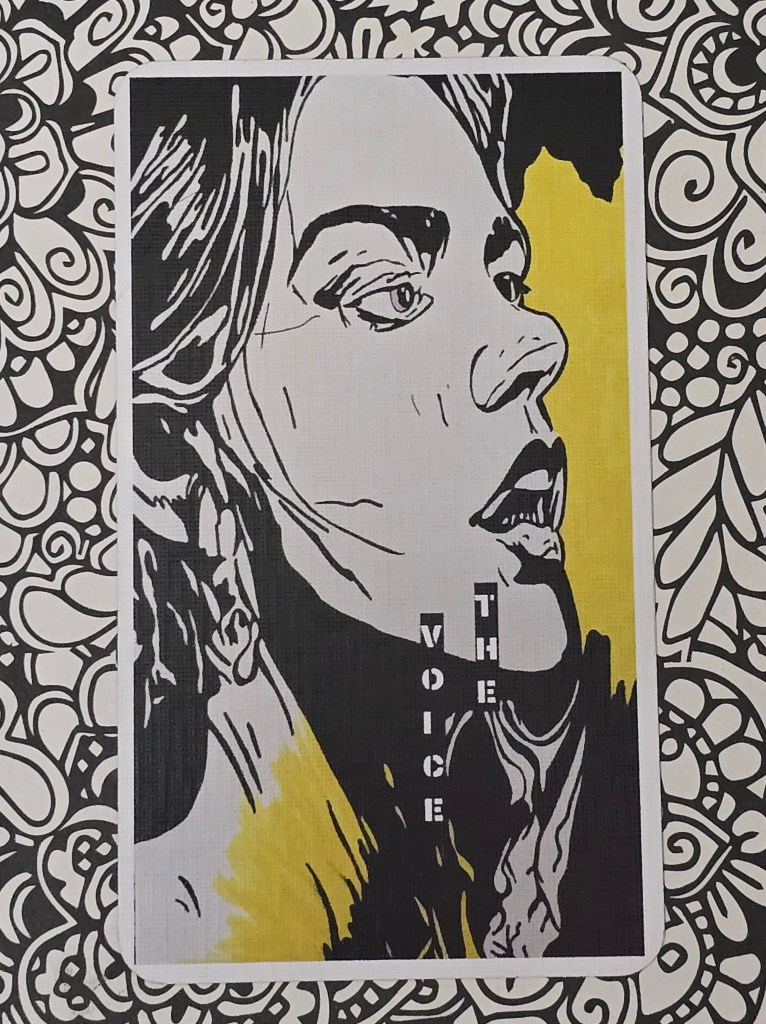
    The Voice (the strength of a word)

    How do you use your voice? Do you do so with confidence?

    How can you use your voice for the betterment of the world around you? For the betterment of self? Finding one’s voice is an empowering moment. Using ones voice is one of the strongest tool in your wheelhouse for transformation & growth. When we use our voice with confidence we shape the world around, and within. Words have power, and you are powerful. This also counts for the voice we use for/with ourselves. Be your first supporter. When we support ourselves internally that cofidence will carry externally.

    ——-Oracle of Perception Grab a deck in the shop @ BuyMeACoffee.com/EmbalmedApple

    2 comments on Ritual and Rouge:
  • Unmasking Spiritual Bypassing:

    August 16, 2025
    Basics, Community, Uncategorized

    Spirituality is not about transcending pain. It’s about transforming through it.

    (everything stated in this blog is based upon my own research, personal practice, and opinion)

    In an era increasingly hungry for healing, mindfulness, and meaning, the rise of spiritual practice in everyday life has brought profound gifts. Yoga studios populate our neighborhoods. Meditation apps are installed on millions of phones. Astrology, breathwork, and plant medicine are discussed with ease over coffee. There’s a collective movement, however uneven, toward reconnecting with the sacred. Yet with this golden tide of awakening comes a quieter shadow… spiritual bypassing.

    Coined by psychologist John Welwood in the early 1980s, spiritual bypassing refers to the use of spiritual ideas, beliefs, and practices to avoid facing unresolved emotional issues, psychological wounds, or painful truths. It’s the tendency to use spirituality as a way to “rise above” or “transcend” the messiness of being human, especially the raw, uncomfortable parts. Rather than confronting grief, trauma, shame, rage, or injustice, we leapfrog into love and light, chanting affirmations and invoking higher vibrations while that thing we are actively ignoring festers beneath the surface.

    Spiritual bypassing can be subtle. It often wears the mask of wisdom, calm, or enlightenment. In reality, over time, it stagnates growth, erodes authenticity, and reinforces systemic harm. Let’s look at how it plays out both personally and collectively, and how we might walk a more integrated path.

    Positivity as Denial

    One of the most common forms of spiritual bypassing is toxic positivity: the insistence on being “high vibe only,” regardless of circumstances.

    We’ve all met the person who responds to hardship with an automatic “Everything happens for a reason,” or “Just focus on the good.” Maybe we’ve even been that person. While optimism has value, compulsive positivity often reflects a discomfort with pain, especially our own. It rejects the full emotional spectrum of human life in favor of curated bliss. Resist throwing that rose tinted spiritual filter over suffering. It is not strength, it’s repression.

    Misuse of Non-Attachment

    Non-attachment is a beautiful concept in many traditions, from Buddhism to the Bhagavad Gita. Unfortunately it can also be misapplied to justify emotional detachment, avoid accountability, or withdraw from relationships that require vulnerability. Resist using spiritual language to avoid real-world emotional presence, it isn’t wisdom. It’s emotional avoidance dressed in spiritual drag.

    Premature Forgiveness

    Forgiveness is often framed as a hallmark of spiritual maturity. But forgiveness before the wound is fully acknowledged is a form of self-abandonment. Take the time to process trauma. Rage, set boundaries and don’t skip the messy middle: grief, anger, mourning. Real forgiveness is not a bypass. It’s a culmination, a release that comes after truth has been fully felt.

    Escaping Responsibility via Fate or Karma

    Relying too heavily on beliefs like “everything is as it should be,” or “they must’ve attracted that experience,” can lead to a quiet erasure of empathy and personal responsibility. Human experience, and emotional reactions to that experience are natural. Don’t confuse spiritual gaslighting for spiritual insight.

    The Community-Level Impact of Spiritual Bypassing

    While personal bypassing erodes individual authenticity, collective spiritual bypassing becomes a kind of systemic denial: a refusal to engage with uncomfortable truths at the societal level. This shows up in New Age, yoga, and wellness communities in ways that quietly reinforce privilege, apathy, and injustice.

    “We Are All One” as a Silencing Tool

    Unity is a core spiritual truth. But when used to dismiss difference, it becomes a weapon. Addressing the very real lived experience of inequality is important. Don’t silence the critique with spiritual platitudes: “We are all one. There is no race or gender in spirit.”.  This is not unity. This is erasure.

    Spiritual Meritocracy and Class Blindness

    Much of contemporary spirituality centers around ideas of “manifestation,” “abundance,” and “creating your reality.” While these concepts can be empowering, they often ignore systemic barriers like poverty, racism, and ableism. Don’t ignore the material realities of people born into generational trauma, displacement, or chronic illness. To imply that spiritual success = moral worth = wealth is prosperity gospel in New Age cosplay, not enlightenment. Spirituality should include compassion for human struggle, not just vision boards and six-figure income goals.

    Ignoring Injustice in the Name of “Higher Consciousness”

    A spiritual community that avoids talking about racism, climate collapse, or inequality is not neutral. It’s complicit. “Focusing on the negative lowers our vibration.” Is a cop-out, and we all know it. Refusing to name injustice doesn’t make it go away. It just reveals the limits of a spirituality that values personal comfort over collective liberation.

    A More Integrated Spirituality

    What’s the alternative to bypassing? It’s not abandoning spirituality but deepening it. Making it honest. Embodied. Engaged.

    Here are some ways we can move beyond bypassing:

    Honor the Full Emotional Spectrum

    Spiritual growth includes grief, anger, confusion, despair, not just joy and peace. These “negative” emotions are not failures of consciousness. They are part of what makes us whole. Practices like shadow work, somatic therapy, and trauma-informed mindfulness can help us stay present to our pain without being consumed by it.

    Make Space for Complexity

    Spirituality is not an escape from contradiction. It’s the capacity to hold paradox. We can believe in oneness while acknowledging injustice. We can practice non-attachment and still care deeply. We can value love without skipping anger.

    Listen to the Margins

    Instead of retreating into spiritual echo chambers, seek out teachers, practitioners, and voices from historically excluded groups. Read Black feminists. Support Indigenous-led ceremonies. Uplift disabled mystics. The divine speaks through diversity, not just enlightenment influencers.

    Practice Real Accountability

    When we harm others, the most spiritual thing we can do is not forgive ourselves prematurely or cite our “vibration.” It’s to take responsibility. To apologize. To change. Accountability is a sacred act (read that again).

    Anchor the Sacred in the World

    Spirituality that’s disconnected from the material world becomes fantasy. Spirituality that meets the world as it is, raw, unjust, beautiful, imperfect, is transformative. This means showing up: for protests. For community. For the Earth. For the friend in grief. For the parts of ourselves we’d rather avoid.

    Light That Embraces Shadow

    Spiritual bypassing is not just a flaw in individual character. It’s a byproduct of a culture that fears pain and worships image. But true healing, true liberation, is never found in avoidance. It’s found in descent: into the wound, into the shadow, into the real. The goal of spiritual life is not to feel good all the time. It’s to become real. To feel fully. To integrate. Let’s build communities that don’t flinch from truth. Communities that honor the wholeness of being. Communities that see the divine not only in the stars, but in the dirt beneath our fingernails, the tears on our cheeks, and the tangled, glorious mess of our shared humanity.

    Because that is where the sacred lives too.

    No comments on Unmasking Spiritual Bypassing:
  • The Ecstatic and the Unhinged:

    August 13, 2025
    Basics, Ceremonial, Chaos, Uncategorized

    Dancing the Line Between Divine Madness and Magical Burnout

    There comes a point in every serious spiritual seeker’s life when you ask yourself one of the Big Questions:

    “Am I experiencing divine ecstasy… or am I about to spiral into a nervous breakdown in front of my altar again?”

    Maybe you’ve been up for three days straight talking to deities who sound suspiciously like your inner monologue with better vocabulary. Maybe you’ve performed 27 rituals this week and haven’t done laundry since Midsummer. Maybe you’ve convinced yourself that sleep is a colonized concept and that caffeine counts as a sacrament.

    Welcome to the tightrope walk between divine madness and magical burnout, where you’re never quite sure if you’re embodying the spirit or if the spirit is running off with your executive function.

    This is your slightly unhinged, deeply honest, and probably overdue chat about walking that line without completely falling off the edge.

    What Even Is Divine Madness?

    Let’s start with the good stuff. Divine madness, also called entheos, furor divinus, or “whatever the hell just happened during that ritual”, is that ecstatic, explosive, consciousness-shattering experience where you feel like you’ve been plugged directly into the numinous.

    It can look like:

    Speaking in tongues you didn’t study

    Crying at a tree because it loves you back

    Laughing until you throw up after seeing your shadow self wearing a clown hat

    Touching something vast, wild, and terrifyingly alive

    Divine madness is what mystics chase, artists bathe in, and poets romanticize. It’s glorious. It’s transformative. It will also teach you, the hard way, that you should know how to ground yourself.

    The Crash After the Cosmic High

    Burnout in the magical world is a sneaky little bastard. Unlike work burnout, which is mostly just caffeine and existential dread, magical burnout looks like devotion…until it doesn’t.

    At first, you’re riding high. You’re communing with spirits and mental downloading ten rituals a day. You’re performing elaborate workings by candlelight, and posting your tarot pulls like they’re stock tips.

    …Then you hit a wall, and it hits back harder. You feel empty, numb, or fried. You avoid your altar like you owe it money. You can’t tell if your guides ghosted you or if you blocked them out of exhaustion. Every spell starts to feel like a group project you didn’t sign up for. And the worst part? You don’t feel holy anymore. You feel broken. Like the gods came, used your skull as a chalice, and forgot to put the lid back on.

    It Is Not Mercury’s Fault (read that again)

    Modern spirituality often lacks the container that ancient traditions had. You know…temples, mentors, fasting schedules, built-in rest periods, and large men with sticks to make sure you didn’t invoke something you couldn’t banish. In our DIY, on-the-go culture, there’s no structure to protect you from spiritual excess. No priest to say, “Take a nap.” No oracle to say, “Maybe don’t channel three gods during your lunch break.”

    Instead, we get:

    Spiritual hustle culture: “If you’re not doing daily offerings, do you even care?”

    Mysticism as trauma response: “If I stay connected to the spirits, I don’t have to feel my human pain!”

    Occult FOMO: “Everyone’s summoning daemons except me!”

    Ritual codependency: “If I skip full moon devotion, Hekate will be mad and I’ll stub my toe!”

    We confuse obsession with devotion. We confuse exhaustion with progress. We confuse channeling higher wisdom with manic hyperfixation. And… no one stops us because it looks holy.

    Until we fry…

    How to Tell Which Side of the Line You’re On

    Here’s a quick diagnostic glance:

    SymptomDivine MadnessMagical Burnout
    Sudden insightsFeel expansive & groundingFeel urgent and chaotic
    Sleep habitsDream-heavy, potent, mythicNonexistent or restless
    Emotional stateCathartic, powerful, soul-expandingDrained, numb, irritable
    Message from spirits“Rest now, beloved.”“Do more or we’ll leave.”
    Rituals feel likeSacred playCompulsory homework
    Your journal says“I danced with the stars”“I think my ancestors are mad at me because I forgot to light a candle”
    Relationship with your bodyEmbodied and tenderDissociated and dehydrated
    Favorite quote“I am full of awe”“I don’t remember the last time I blinked”

    If you’re reading this while sobbing because your altar called you out in a dream…congrats, you’re somewhere in the middle. Welcome to the ecstatic club. Let’s get you some electrolytes.

    Here’s the truth, you need the ecstatic. You need the sacred madness. It shakes loose the lies and scrapes barnacles off your soul. But… you need a damn container. Here’s how to hold the divine without becoming spiritually feral:

    Build Ritual Hygiene: Don’t just “clean your tools”. Make time for integration. Don’t jump straight from deity possession to checking Instagram. Journal. Breathe. Eat a goddamn snack. If you’re regularly touching cosmic voltage, you need to ground like it’s your full-time job.

    Schedule Spiritual Rest Days: Yes. A Sabbath. A literal day where you don’t cast, cleanse, channel, invoke, or obsess. Touch grass. Watch cartoons. Bake cookies for no one. Let your soul stretch its legs outside the temple. Even the gods take naps. You think Dionysus is partying 24/7? That god knows how to sleep in wine-soaked luxury.

    Use Anchors: (Physical, Emotional, and Social) Ecstatic work is disorienting, and it’s meant to be. Create tethers like wearing grounding jewelry. Use a ritual object that reminds you who you are. Text a friend and say, “Hey, if I start talking like I’m the literal embodiment of Hermes Trismegistus again…check me”.

    Remember: Community is the container. Solitude is a spell, but isolation is a trap.

    Practice Devotion, Not Addiction: Ask yourself “Am I doing this because I feel called, or because I feel compelled?”.

    Spiritual addiction looks like: Fear of missing a sign, anxiety if you skip a practice, and/or doing rituals to feel “worthy” again.

    Spiritual devotion looks like: Joyful commitment, spaciousness, and saying “not today” while knowing your gods still love you.

    Laugh When You Catch Fire

    Not literally. (Unless you’re a fire mage. In which case, do your thing.)

    But seriously, when the madness tips too far, when your ritual feels like chaos cosplay, when your magic journal reads like a fever dream written by a poet with heatstroke…laugh. Recalibrate. Step back. You are not a failed mystic. You’re a human…with Wi-Fi and a highly suggestible nervous system.

    The Edge Is Where Magic Happens (Practice Self Care)

    Ecstasy is beautiful. Madness is sacred. But… even the mystic comes down from the mountain. Even shamans return to their villages. Even the Oracle closes shop for rest. You don’t have to choose between awe and rest. You can have both. You can channel the divine on Tuesday and still say “no thanks” on Wednesday. You can ride the lightning and then unplug your altar for a week without being smote. Get weird. Talk to the trees. Dance with the gods. Let your body become a ritual and your heart become a hymn.

    But you also need: To take a nap, drink some water, and laugh at your visions. Touch your feet to the floor and say, “I am divine, but I’m also overdue for a snack and a sitcom.”

    That, my friend, is the biggest step to mastery…mastering yourself.

    2 comments on The Ecstatic and the Unhinged:
  • Shielding to Prevent STDs

    August 10, 2025
    Basics, Rituals, Uncategorized

    (Spiritually Transmitted Disruptions)

    (everything stated in this blog is based upon my own research, personal practice, and opinion)

    Let’s talk shielding. I’m not talking Marvel’s S.H.I.E.L.D. or prancing around with a crystal tiara hoping the vibes love you. I mean the spiritual equivalent of locking your doors, drawing your blinds, and making sure no random drunk at the astral bar decides your energy is free beer. Here’s the thing: the invisible world is loud. It’s not all serene monks chanting under waterfalls. It’s more like a 24/7 street fair with glitter, bad decisions, and the occasional spiritual pickpocket.

    When you start practicing magick or energy work, you quickly learn that the world is full of currents and moods that are not yours. If you’re not paying attention, they’ll stick to you like gum on your shoe.

    Why Shielding Matters

    Here’s the thing no sparkly influencer wants to admit: walking around unshielded makes you an all-you-can-eat buffet for every wandering thoughtform and cranky neighbor’s bad mood. It’s not cute, it’s exhausting. Energy vampires exist. They’re not necessarily supernatural, they’re people who leave you feeling like a wrung-out towel after ten minutes of conversation. Shielding is just emotional street smarts. You wouldn’t leave your car unlocked in a crowded city. Don’t leave your subtle body unlocked in a crowded world.

    Shielding Starter Pack

    You don’t need to join a coven or chant in Sanskrit under a blood moon. Shielding is simple, and like brushing your teeth, it works best when you do it daily.

    Ground First: Visualize roots sinking into the earth. Feel your energy drop and settle.

    Center Your Energy: Inhale, exhale, pull your focus into your core. If your energy feels like spaghetti, centering is the fork that keeps it together.

    Bubble Up: Picture a sphere of light around you. It can be any color that makes you feel secure. Gold, white, neon purple, doesn’t matter. Program it like a firewall: love and wanted/needed energy in, garbage out.

    This is your basic shield. Done in under three minutes, and suddenly you’re not so snack-flavored anymore.

    Because Shields Are Like Showers

    You can’t do this once and call it good forever. Energy shifts. Life happens. Think of shielding like spiritual hygiene. Centering and focusing ourselves at various points throughout the day also helps build self-awareness, and recognition of the shifts in our subtle bodies. Here’s how I keep mine minty fresh:

    Morning Refresh: Quick ground, center, bubble.

    Evening Rinse: Shake off any psychic gunk. Literally shake your body if you need to.

    Weekly Deep Clean: Salt baths, smoke cleansing, or a crystal in the pocket that feels like a bouncer.

    These help avoid staring at the ceiling at 3 a.m., wondering why you feel like a stale sponge full of grief that isn’t even yours.

    When You Forget and Get Slimed

    We’ve all been there. You hit a party or even a grocery store, forget your shield, and come home buzzing with other people’s drama. Here’s how you can reset:

    Cleanse: Bath or shower with salt, visualize sludge washing off. Salt scrubs are great for “shower only” situations.

    Rebuild Your Bubble: Sit, breathe, see it forming bright and solid.

    Reclaim: Out loud, firmly and confidently say, “My energy is mine. I call it back now.” Snap, clap, whatever seals the deal.

    Every time I do this, I can feel my brain clear and my own energy snap back like Wi-Fi finally connecting after a storm.

    Leveling Up Your Shields

    Once you get the basics down, try adding flair:

    Layered Element Shields: Earth for grounding, water for emotions, fire to burn off nasties, air to keep the mind sharp.

    Sigil Shields: Sketch or visualize a protective symbol on your shield. Think of it like a secret password.

    Reflective Sphere: Picture a mirrored disco ball, unwelcome energy bounces right back to sender.

    I’ve used these in chaotic spaces, and people’s drama just… slides off. They still have their storm, but you’re standing in your calm.

    Oh, what a fool was I – Storytime

    I once worked in a restaurant where one coworker practically radiated panic. I went home every day exhausted and convinced my life was falling apart. After a week or two of consistent bubbling, I noticed something: the panic was still in the room, but it wasn’t mine. That’s the power of shielding; you learn the difference between your energy and someone else’s mess.

    Another time, I went to a huge festival with zero shielding (We all do silly things in our youth). I came home angry, weepy, and exhausted. After a salt bath and a bubble rebuild, I felt like myself again. Lesson learned: shields first, well second to bug spray…

    Boundaries Are Magick, Period!

    Shielding is just expressing energetic boundaries. People hear “boundaries” and think they’re harsh, but they’re really the most loving thing you can do for yourself. They let you show up in life without becoming the psychic community’s lost-and-found box.

    You will forget sometimes. You’ll get slimed, drained, and cranky. It’s fine. Rinse, bubble, reclaim, repeat. Spiritual hygiene isn’t about fear of what’s out there, it’s about respect for yourself and your space.

    Build your bubble. Keep it fresh. Walk through the world like the moisturized, unbothered steward of your own energy life.

    When the world gets loud… Just smile, adjust your shield, and keep moving.

    No comments on Shielding to Prevent STDs
  • Thelema & The Responsibility of Will

    August 2, 2025
    Basics, Ceremonial, Community, Uncategorized

    The Law Isn’t Your Excuse To Be An A-hole

    (everything stated in this blog is based upon my own research, personal practice, and opinion)

    Living by the Law of Thelema sounds simple enough: “Do what thou wilt shall be the whole of the Law. Love is the law, love under will.” 

    On the surface, it feels like a spiritual get out of jail free card. People hear it and think, “Ah, I can just do whatever I want now.” Cue visions of running barefoot through the forest, tossing aside all responsibilities, and living as a free-spirited chaos gremlin. If you’ve ever tried to live it for real, you know that’s not Thelema. Living your life by the law of Thelema takes work. It’s figuring out what your Will actually is and then living by it with uncompromising honesty. That, my friends, is the most liberating and terrifying commitment you’ll ever make.

    This isn’t a Pinterest slogan for this season’s mood board. Thelema is a life philosophy that will strip you down to your bare essence and demand that you either step up or admit you’ve been lying to yourself. It’s messy, exhilarating, and the freedom it offers is worth every ounce of sweat and self-confrontation.

    Stop Pretending “Will” Means “Whatever I Feel Like”

    First, we need to crush the most persistent misconception right out of the gate. “Do what thou wilt” is not permission to indulge your every passing impulse. It’s not spiritual anarchy, and it’s not a hall pass for being selfish, destructive, or lazy. If your idea of Will is snapping at your partner, being fickle, or binge eating cake because you’re “following your bliss,” then sorry, you’re not doing Thelema, you’re doing ego cosplay.

    Your Will is the underlying current of your life, the authentic path only you can walk. It’s not fleeting desire, social rebellion, or a dopamine high. It’s the quiet, unshakable force that pulls you toward the life you were actually meant to live. If you ignore it long enough, it will drag you through the mud until you pay attention. There’s no divine post-it note waiting for you by your morning coffee. It’s a journey of stripping away expectations, family baggage, fear, and all the shiny lies you tell yourself to avoid doing what actually matters.

    The Dirty Work of Discovering Your Will

    If you think finding your Will is going to be a mystical montage set to inspirational music, think again. It’s more like a spiritual scavenger hunt where the clues are buried under your own denial and bullshit. Finding it involves brutal self-honesty, uncomfortable introspection, and yes, a lot of trial and error.

    I suggest starting with radical self-reflection: journaling, meditation, divination, therapy, shadow work, you name it. Dig into what lights you up, what drains you, and what patterns you keep repeating. The universe isn’t going to text your Will if you ask sweetly. You have to sift through your own mess to find it.

    Always test everything. Always. Thelema isn’t theory; it’s practice. Try things. Fail. Pay attention to what feels aligned and what feels like a slow death in disguise. Log, and track your progress. Your Will isn’t always glamorous, and it doesn’t always make sense to other people. Sometimes your Will is walking away from a relationship that everyone else thinks is perfect. Sometimes it’s quitting a stable job because it’s killing your soul. Sometimes it’s staying in the hard work when every part of your ego wants to run. Kill the script you were handed. Family expectations, cultural narratives, Instagram inspiration boards…burn them. Your Will doesn’t care what your mother thinks or what’s trending. It cares about who you are at the core and what you came here to do.

    The Weight of Responsibility

    Here’s the part people like to skip: living by Will is not just freeing, it’s heavy. Once you know your Will, you are accountable for following it. Every choice either aligns with your path or drags you off it. Unlike the frameworks of other spiritual paths, Thelema doesn’t hand you a safety net. No divine parent is going to swoop in and make it all okay if you sabotage yourself.

    Living Thelema requires:

    Relentless self-honesty: If you’re lying to yourself, you’ve already lost.

    Courage: Walking your path will piss people off. Some will call you selfish. Others will envy you. It doesn’t matter.

    Discipline: True Will is like a river, you can either flow with it or spend your life bashing into rocks.

    Integrity: Will doesn’t need to harm others. If your so-called Will requires stomping on someone else, that’s ego, not alignment.

    Every action ripples. Every step defines you. The more you align with Will, the more those ripples amplify. That’s why living Thelema is as much about responsibility as freedom.

    How to Actually Live the Law of Thelema

    If all of this sounds overwhelming, good. That means you’re paying attention. Here’s how you turn philosophy into reality:

     Know yourself like your life depends on it…because it does. Stop outsourcing your identity to parents, partners, or society. Learn what makes your soul expand and what makes it shrink.

    Cut the noise. Social media, news cycles, and cultural narratives are designed to drown out your inner voice. Create space for silence, reflection, and conscious living.

    Experiment relentlessly. Thelema is practical, not dogmatic. Test paths. Take risks. When something aligns, you’ll feel it in your bones.

    Own your consequences. No excuses. You are your own judge, jury, and executioner. Every misstep is a lesson if you have the courage to learn.

    Refuse to compromise your core. People will try to sway you, guilt you, or tempt you into playing small. The price of alignment is the courage to stand firm.

    The Beautiful, Terrifying Freedom

    The paradox of Thelema is that the more you align with your Will, the freer and lighter life becomes, but only because you’ve taken full responsibility for yourself. Freedom isn’t floating aimlessly; it’s sailing with purpose. It’s terrifying because there’s no one else to blame if you fail. It’s exhilarating because the victories are entirely yours.

    When you live by Will, life starts to click. Synchronicities line up. Obstacles melt into challenges you can handle. Even the hardships make sense because they’re part of your path. This ease comes with the price tag of constant self-honesty and the courage to walk alone when necessary.

    This isn’t a path for the lazy, the selfish, or the perpetually indecisive. It’s for the ones willing to meet themselves head-on and say, “I will live my life, no one else’s, come what may.” A wild, liberating, and deeply human truth about living by and carrying the responsibility of Will. That… that right there is magick.

    No comments on Thelema & The Responsibility of Will
  • Layering Wards Like an Onion:

    July 30, 2025
    Basics, Ceremonial, Chaos, Rituals, Uncategorized

    Protecting Yourself & Your Space

    (everything stated in this blog is based upon my own research, personal practice, and opinion)

    You’ve done the basics. You’ve salted your doors. You’ve lit your candles. You’ve set up a single protective ward around your home and said, “Good enough,” then promptly moved on to hexing that one ex-friend who kept stealing your tarot decks.

    And now?

    You’re tired. Weird things are happening. Your dreams are spooky. Your plants keep dying. The energy is off. The milk curdled despite being oat-based (now that’s paranormal!).

    Friend, your single ward is not enough.

    This is where we talk about layering wards.
    Yes, like an onion.
    Because one line of defense in this spiritual hellscape we call reality can be insufficient.

    Let’s explore building a protection system so comprehensive, so stubborn, so emotionally overprepared, that even the pettiest spirit wouldn’t dare.

    Grab your brick dust, and settle in. We’re fortifying our magical life like it’s the psychic equivalent of a medieval castle with abandonment issues.

    Why One Ward Isn’t Enough (Welcome to the Multidimensional Mess)

    Listen, I get it. You did a warding ritual once. You burned some sage, said a few confident Latin words from a Pinterest pin, and declared yourself untouchable.

    That’s cute.

    Spiritual protection isn’t a Netflix subscription. You don’t set it and forget it. One ward is fine if you live alone in the woods and your only threat is a mildly haunted raccoon. But if you:

    Live in a city

    Own a smartphone

    Use social media

    Practice magick

    Have enemies

    Work in customer service

    Exist…

    Then you need layers. You may be asking “Why do you say that G?”. Simple, because threats don’t arrive in one dimension. Energetic garbage seeps through emotional portals, astral highways, digital spaces, and that one bitter witch who saw your Instagram and decided to “vibe-check your aura”.

    One line of defense? That’s just an invitation. Here’s some guidance on how to layer your wards like the protection deity you were always meant to be.

    Layers, Like A Onion

    (keeping the unwanted outta yer swamp)

    Layer 1: Personal Shields (Your Psychic Skin)

    This is your energetic baseline. The barrier between you and everything else.

    You should have these active every damn day. Build them during meditation, while brushing your teeth, while pretending to listen in Zoom meetings. These are your portable wards.

    What they block:

    Emotional bleed-through

    Psychic leeches

    That one coworker who sucks your will to live

    Layer your shields. Use visualization, affirmations, and elemental filters. If you’re feeling spicy, add a reflective thorn-field that bites back when pinged. I’m a big fan of mirror shields in general, it doubles the fun.

    Layer 2: Clothing and Jewelry (Your Magical Fashion Armor)

    You’re already wearing clothes (hopefully…I mean…I don’t judge). Make them count.

    Enchant your shoes to walk away from toxicity.

    Charge your rings to repel energy vampires.

    Sew sigils into your hoodie so your aura doesn’t look like a haunted funhouse mirror.

    This layer protects you in public. Also, it helps deflect shade from people who read energy like gossip columns.

    Layer 3: Threshold Wards (Doors, Windows, Entry Points)

    Your home isn’t magically sealed unless you make it that way.

    Every threshold is a spiritual invitation, until you slam that portal shut with intention.

    Tools useful for this:

    Salt

    Bricks

    Iron keys

    Protective herbs

    There is always my favorite; screaming at your front door like it disrespected your mamma, and owes you money…an ex watched me do this one to windows in a creepy ass apartment.

    Sigils on door frames. Protective charms above windows. Rusty nails in potted plants. Think of your home like a magical TSA checkpoint, and wards as creating pointed backscatter when triggered by unwanted energy.

    Layer 4: Environmental Wards (House, Room, Land)

    This is the ward that holds your whole space. Your house, apartment, yurt, haunted Plymouth Fury, whatever.

    This is the dome.
    The magickal firewall.
    The place where nothing gets in without a spiritual scan.

    Build this with:

    Sigil webs around the perimeter

    Buried charms

    Protective spirits

    Ancestor guardians

    Screaming “No!” every morning at sunrise for psychic dominance

    Set up multiple triggers:

    Passive (permanent wards)

    Reactive (alarm spells, like bells or sudden headaches)

    Retaliatory (if something touches these, it gets flamed back into the ether)

    Make it a full security system: sirens, locks, motion sensors, and an astral Doberman named FAFO.

    Layer 5: Digital Wards (Your Phone is a Portal, Babe)

    You do realize your phone is a magical black mirror, right? It’s a scrying tool, an information nexus, and a distraction demon rolled into one seductive glowing rectangle.

    Protect it.

    Ward your social media accounts

    Sigil your phone case

    Cleanse your tech (yes, physically and energetically)

    Maybe triple think posting those pics of your personal altar on Facebook

    Your DMs are not safe. Your phone is a leaky portal. Plug it with wards like a magical cybersecurity professional with hypervigilance and a caffeine addiction.

    The Role of Trauma: Why Spiritually Paranoid is Sometimes Accurate

    Let’s talk about something that rarely makes it into the neo-pagan 101 books: many come to magick through trauma.

    Maybe you survived something. Maybe you carry ancestral scars. Maybe your nervous system is tuned to “what fresh hell is this?” on a daily basis.

    Guess what? That makes you good at wards.

    Why? Because you know what danger feels like. You anticipate the worst. You don’t trust easily. You already rehearse exit strategies in your head while smiling politely at people.

    Warding is sacred hypervigilance.
    It’s weaponized boundaries.
    It’s taking that hair-trigger survival instinct and giving it a job. (side note…if you give it a job it can get out from underfoot of your goals.)

    Instead of just managing your anxiety, give it a knife, a sigil, and a set of magical tripwires. Let it help.

    Maintenance Mode: If You Don’t Refresh Your Wards, They Rot

    Let’s have a quick intervention.

    Wards go stale.

    They’re not divine mandates. They’re not eternal. They degrade, like leftover ward-spaghetti in a Tupperware you forgot behind your altar.

    Set a schedule:

    Cleanse weekly

    Recharge monthly

    Redraw sigils when faded

    Feed guardians regularly (wine, incense, tiny rage poems)

    Walk your perimeter. Check the energy. Notice where it thins or curdles. Refresh like it’s an update to your spiritual antivirus software.

    Sympathetic Wards: Lock Your Hair, Your Blood, Your Shadows

    Sympathetic magic works both ways. If someone gets a piece of you, literal or symbolic, they can reach you.

    This is why you need internal sympathetic wards:

    Ward your hair (seal some in a protection charm)

    Ward your name (I have several on mine)

    Ward your image (your selfies can be cursed, ask anyone who’s ever used a dating app)

    You are a walking altar. Protect yourself like one.

    Building a Warding System: Not a Patchwork of Panic

    Too many occultists slap up wards like spiritual duct tape.

    You need a system. A network. Something cohesive.

    Visual Map: Draw your space. Mark doors, mirrors, plants, spirit homes.

    Assign Functions: This ward reflects. This one absorbs. This one explodes if touched.

    Give Wards Names: Yes, really. Named wards are easier to command, strengthen, and connect with. Ex: “Azrael,” instead of “the thing above the doorway.”

    Link them. Let them communicate. If one ward triggers, have it ping the others. Make your magickal home as interconnected as a smart house, but with fewer data breaches.

    Beware of Over-Warding (aka Magical Constipation)

    Yes, it’s possible to overdo it. If you slap up too many wards without purpose, your space starts to choke. Energy can’t flow. You trap yourself in your own bunker. Spirits won’t visit. Dreams become static.

    Signs of over-warding:

    Feeling claustrophobic in your home

    Sleep paralysis featuring astral bureaucrats

    Rituals feel like shouting into a pillow

    Spirit guides muttering “you need to calm down”

    Balance is key. Layered protection, yes. But also space for air, light, laughter, love, and weird cosmic downloads at 3 a.m. Warding is about keeping out threats, not everything.

    Integrating Warding Into Daily Life

    Your wards shouldn’t just be activated during rituals. They should live with you. Breathe with you. Defend you in traffic.

    Bless your shoes every morning.

    Charge your coffee mug with focus.

    Ward your keys so you don’t lose them to the Void.

    Warding isn’t about living in fear. It’s about living in sovereignty. You are not defenseless. You are not passive. You are a being of boundary, will, and fire.

    Your wards are your way of saying:
    “I matter. My space matters. My peace matters.”

    The Healing Side of Warding

    Here’s the plot twist: warding doesn’t just protect you from harm. It helps you heal.

    When you feel safe, truly safe, your nervous system calms. Your intuition strengthens. Your magick deepens. You stop scanning for danger every ten seconds and start dreaming, creating…becoming.

    Wards don’t have to be angry. They can be loving.
    A shield isn’t just for defense; it’s also a hug you built for yourself out of old spells and unmet needs.

    Let your wards be beautiful. Make them art. Make them poetry. Make them a love letter to yourself that says: “You’re safe now.”

    Build a Fortress, Then Dance in It

    Layering wards isn’t about being afraid of everything. It’s about knowing that the world is sharp and choosing not to be easy meat for the wolves.

    It’s about reclaiming power, not hiding from it. It’s about saying: “Yes, the world is hard. Yes, people lash out. Yes, energy leaks. But not here. Not now. Not to me.”

    Build your layers. Cry if you must. Laugh when you can. Protect yourself like you are worthy of it, because you are.

    Then, once your wards are solid, your house is humming, your mirror spirits are caffeinated, and your altar is secure…

    Put on your favorite playlist.
    Light a candle.
    And dance like you’re untouchable.

    Because you are.

    No comments on Layering Wards Like an Onion:
Previous Page
1 2 3 4 5
Next Page

Blog at WordPress.com.

The Art of Becoming

A new approach to magick

    • About


Loading Comments...
 

    • Subscribe Subscribed
      • The Art of Becoming
      • Already have a WordPress.com account? Log in now.
      • The Art of Becoming
      • Subscribe Subscribed
      • Sign up
      • Log in
      • Report this content
      • View site in Reader
      • Manage subscriptions
      • Collapse this bar